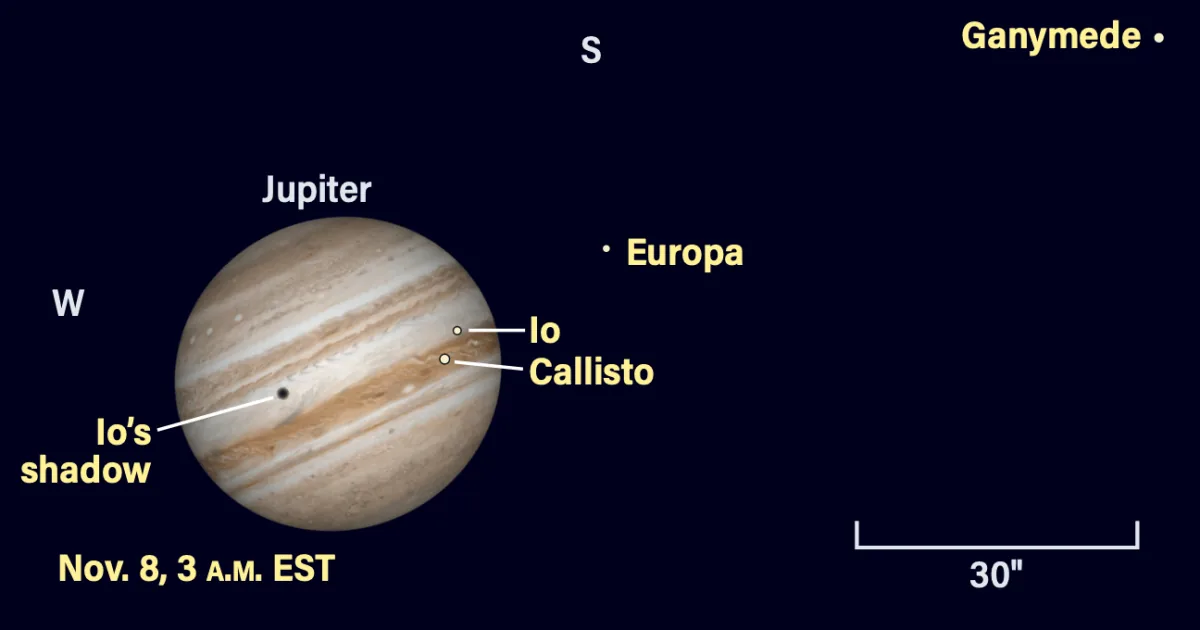
The Gas Giant Rises Before Midnight
The largest planet in our solar system, bright Jupiter, ascended into the night sky shortly before midnight alongside the stars of western Leo. Featured in celestial observation guides, the gas giant and its prominent system of Galilean moons offered a prime target for skygazers and amateur astronomers tracking weekly astronomical events.
Io and Callisto Across the Planetary Disc
During the early morning observation window, the Jovian moons Io and Callisto raced across the face of Jupiter. Observers located farther east were favored with better visibility as the transit unfolded. Positioned just under 5 degrees northwest of nearby stellar markers, Jupiter provided crisp views through small to medium telescopes.
Understanding Orbital Mechanics in Real Time
Events such as Jovian satellite transits allow observers to directly witness orbital mechanics at work within the solar system. Tracking these predictable celestial alignments deepens our appreciation of planetary dynamics and provides valuable observational experience for astronomers following the rhythmic motions of the Galilean satellites.

Comments
Loading comments...