A Special Observation Opportunity for Stargazers
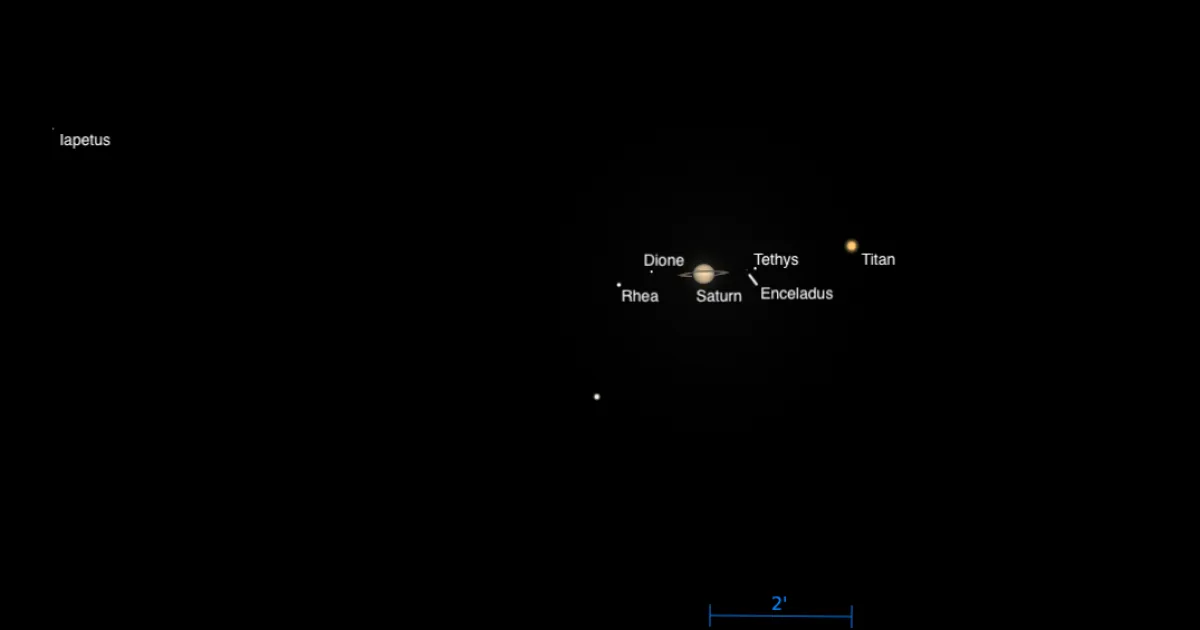
This week presents an exciting observational opportunity for amateur astronomers and stargazers. As part of the sky events scheduled for this period in November, Iapetus, one of the most remarkable moons of the ringed planet Saturn, takes center stage. While skywatchers also have the chance to track Comet 161P/Hartley-IRAS, the specific position of Iapetus creates an ideal setting for observing planetary dynamics.
Greatest Eastern Elongation and Measurement Details
On this observation night, Iapetus reaches its greatest eastern elongation, positioned 9.4 arcminutes east of the ringed planet Saturn. This specific geometric positioning allows the moon to move relatively clear of Saturn's glare, making it easier to pinpoint with telescopes. A key physical characteristic of this moon is that it is tidally locked to its parent world. Tidal locking means that the moon rotates on its axis in exact sync with its orbital period around Saturn.
Scientific Significance of the Two-Toned Moon
Due to being tidally locked, Iapetus always presents the same hemisphere in its direction of motion around Saturn. This dynamic is closely tied to the moon's unique two-toned appearance, featuring one strikingly dark hemisphere and one bright hemisphere. Reaching its greatest eastern elongation provides observers and astronomers with an excellent window to track its light variations and study this unusual world.

Comments
Loading comments...