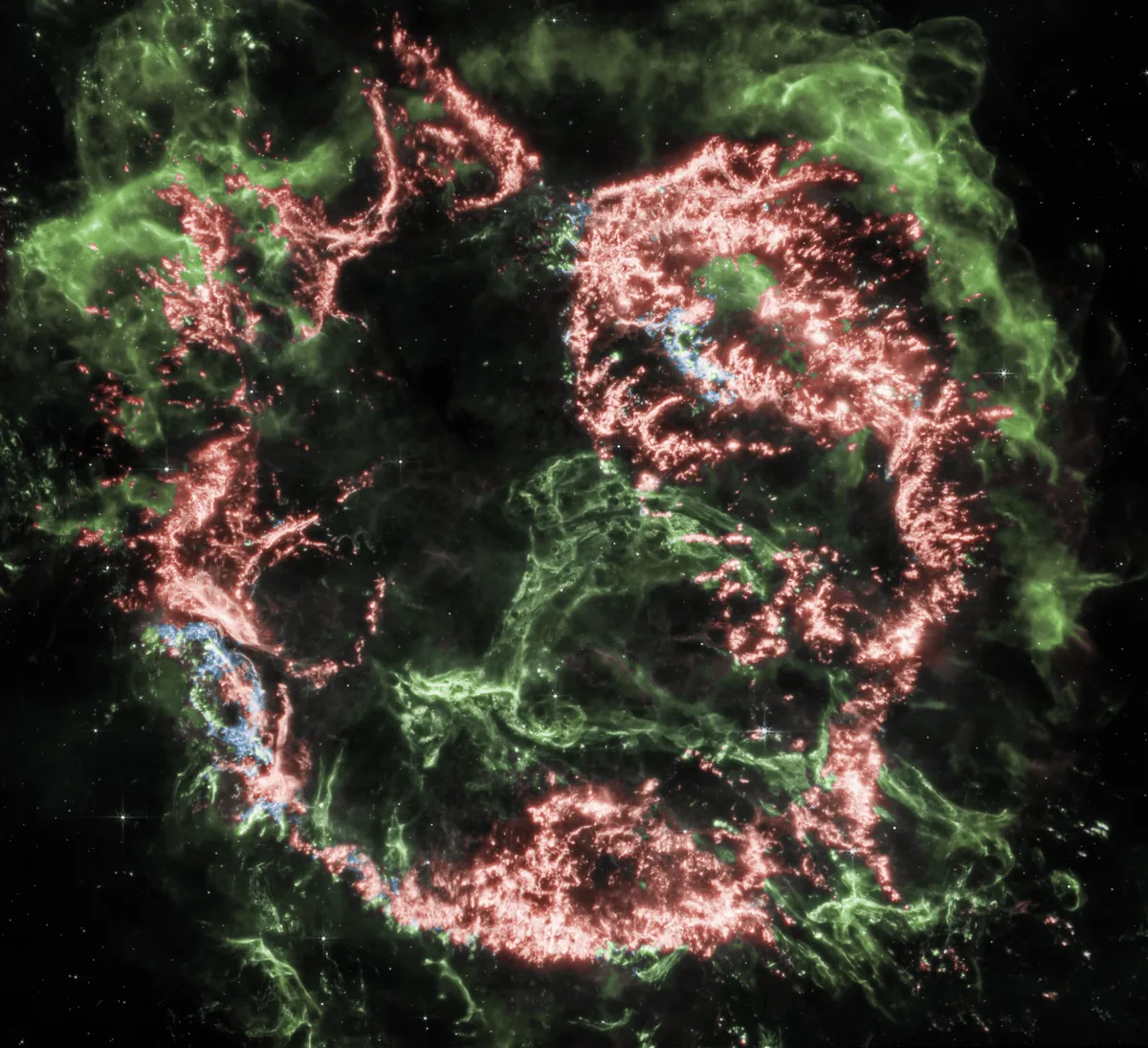
Hot Dust at the Heart of Cassiopeia A
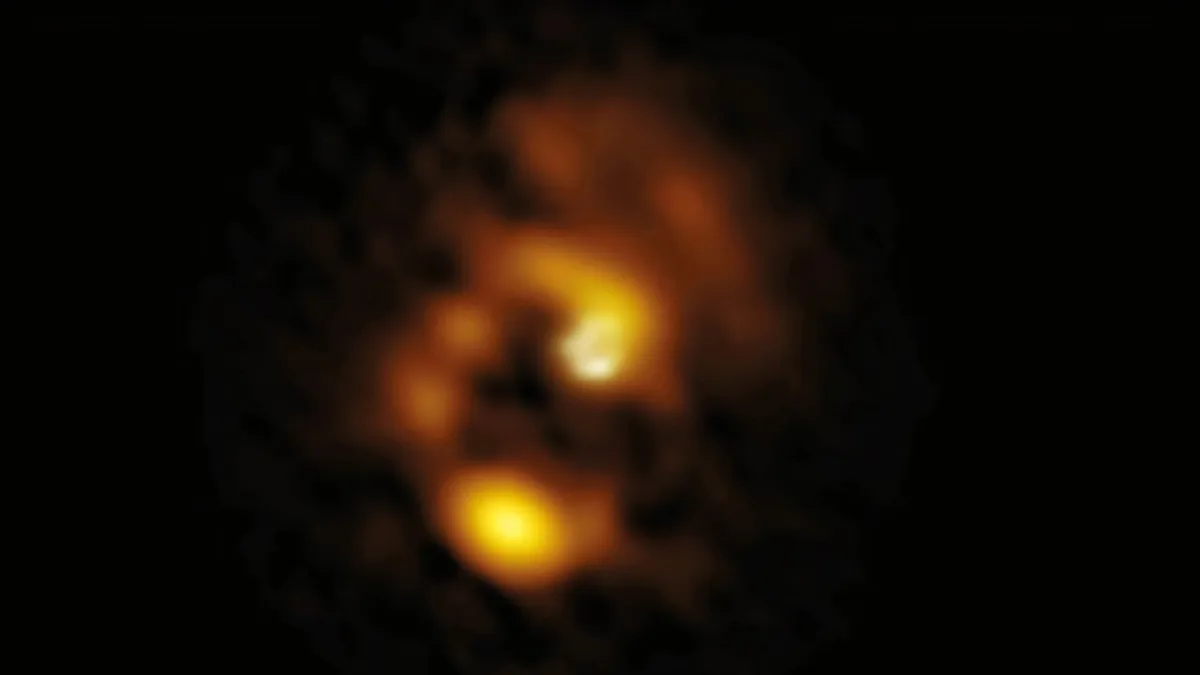
NASA's James Webb Space Telescope has revealed striking new details within the famous supernova remnant Cassiopeia A (Cas A). In a high-resolution mid-infrared image released on Nov. 23, 2026, the observatory exposed the intricate structures of hot dust left behind after a massive star explosion. Webb's capabilities allow researchers to trace how stellar deaths contribute to the continuous cycle of matter in the cosmos.
Detailed Mid-Infrared Observations
By observing in mid-infrared wavelengths, Webb penetrated the dust veils that obscure internal structures in visible light. The telescope precisely recorded the spatial distribution of the expanding dust and gas clouds. These high-resolution measurements provide fine structural details of the remnant's chaotic gas pockets and thermal dust emissions.
Seeding Future Generations of Stars
Supernova remnants represent not just the end of a star's life, but the beginning of new cosmic structures. The expanding clouds of gas and dust ejected into interstellar space eventually collapse to seed new generations of stars and planetary systems. Webb's detailed imaging of Cas A offers critical insights into how heavy elements and cosmic dust evolve across the universe.
Comments
Loading comments...