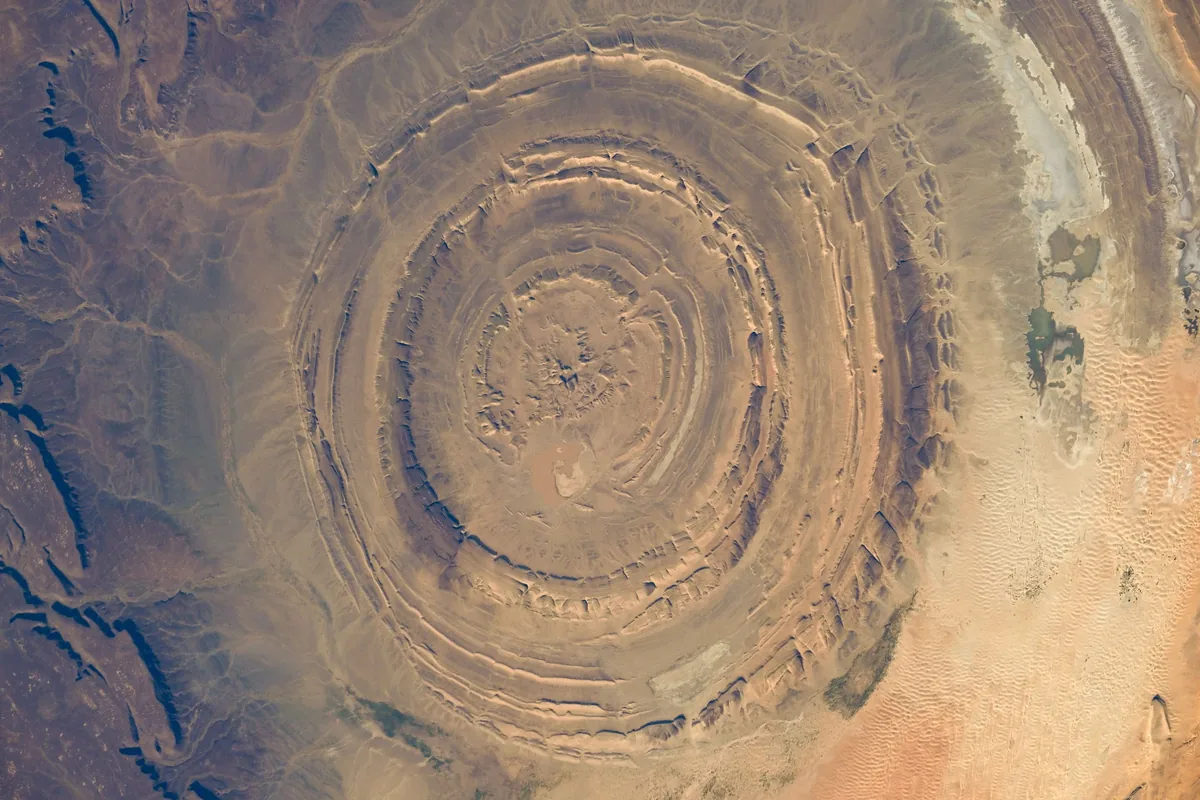
A View of the Sahara's Natural Wonder from Orbit
The International Space Station (ISS) observed the famous Richat Structure, known worldwide as the "Eye of the Sahara," during its orbit over Mauritania on November 14, 2026. As one of the most striking geological formations on Earth, this massive structure resembles a giant eye of our planet when viewed from space.
100 Million Years of Geological Formation and Characteristics
According to scientific assessments, the Richat Structure is an eroded geological dome dating back approximately 100 million years. Formed as a result of igneous activity and crustal uplift in the region, rocks in this type of geologic structure display circular, layered patterns that have eroded over time.
Significance for Earth Geology and Space Observations
Observations conducted from the International Space Station allow scientists to analyze Earth's massive geological processes and erosion patterns from a broad high-altitude perspective. Located within Mauritania, the Richat Structure continues to serve as an exceptional model for both terrestrial geology and orbital Earth observations.


Comments
Loading comments...