Historic Landing and European Mission Success
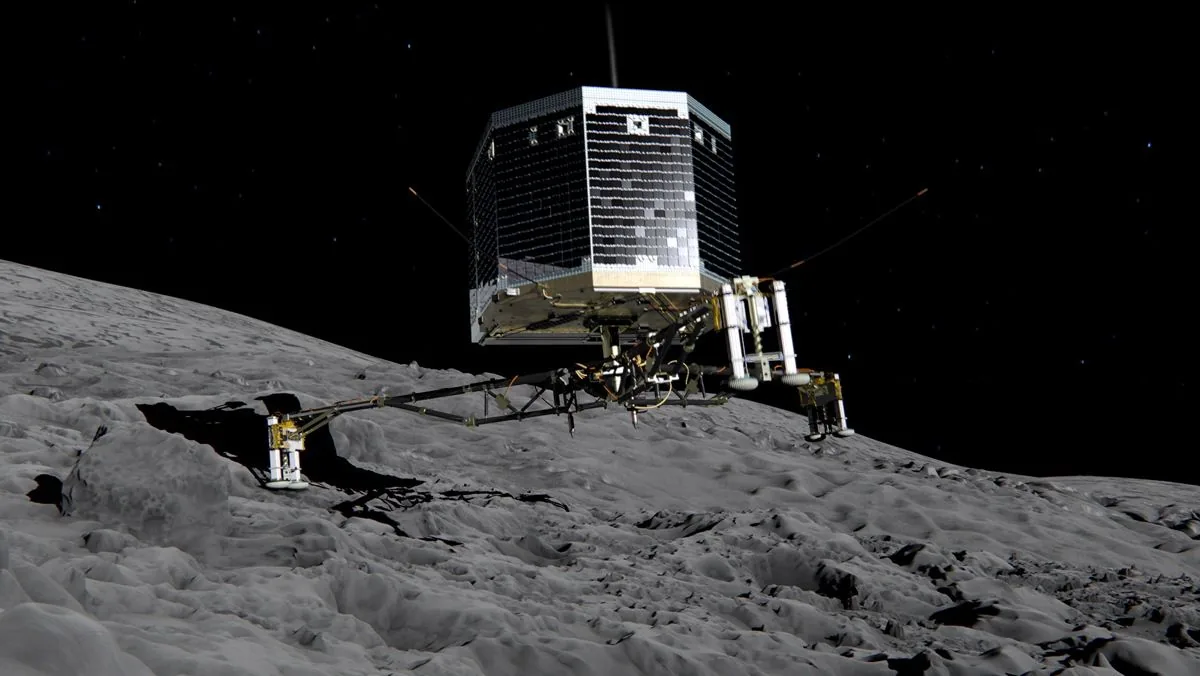
On November 12, 2014, European space exploration achieved a historic milestone when the Philae spacecraft landed on Comet 67P/Churyumov-Gerasimenko. This unprecedented landing represented the first time a human-made probe successfully performed a soft touchdown on the surface of a comet. The event captured the attention of the global scientific community and demonstrated advanced navigational capabilities across deep space distances.
Unexpected Bounces and Nearly Two Years Lost
Upon initial touchdown, the landing sequence did not unfold entirely as anticipated. The probe bounced twice across the comet's low-gravity surface before finally coming to rest. Cast into a dark and shadowed crevice, Philae was deprived of direct solar energy, which caused its onboard batteries to deplete rapidly and severed communication with ground controllers. As a result of this precarious resting spot, the European probe remained lost on the comet's rugged surface for nearly two years.
A Turning Point in Planetary Science
Despite the unintended bouncing and subsequent loss of contact, Philae's arrival on Comet 67P marked a major achievement in planetary science. The brief initial operational window provided vital in-situ data about the structure and physical properties of pristine remnants from the early solar system. The mission proved that humanity could reach and touch ancient cometary bodies, establishing invaluable lessons for future sample-return and surface landing initiatives across small celestial bodies.
Comments
Loading comments...