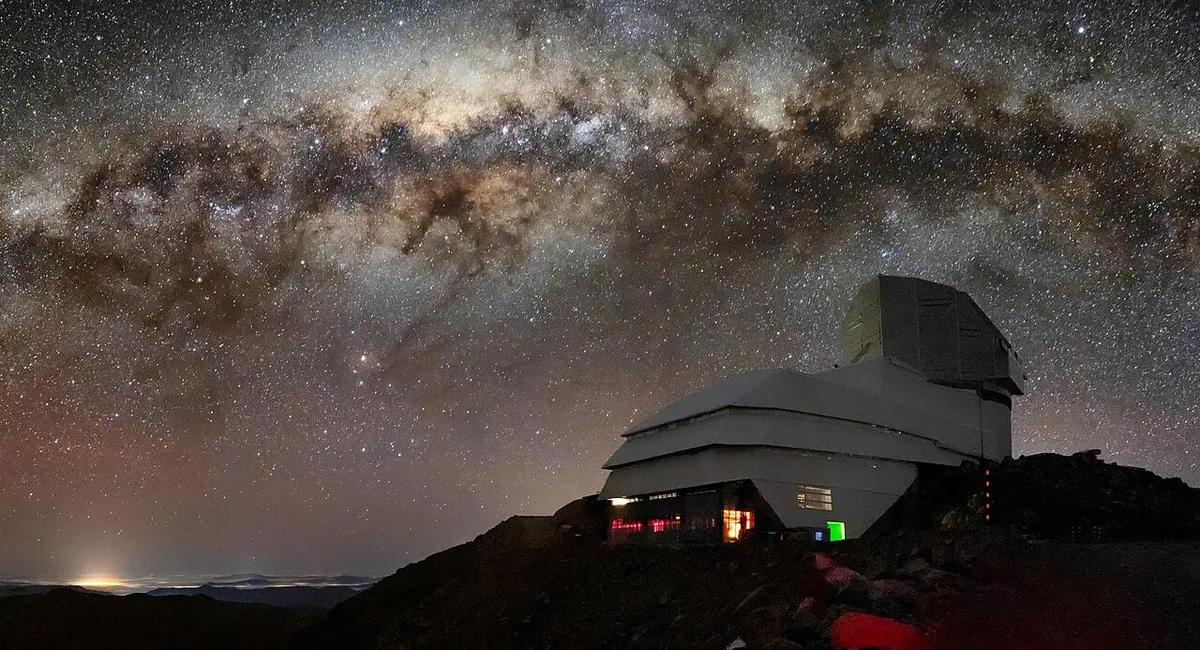
Hidden Neighbors Around the Milky Way
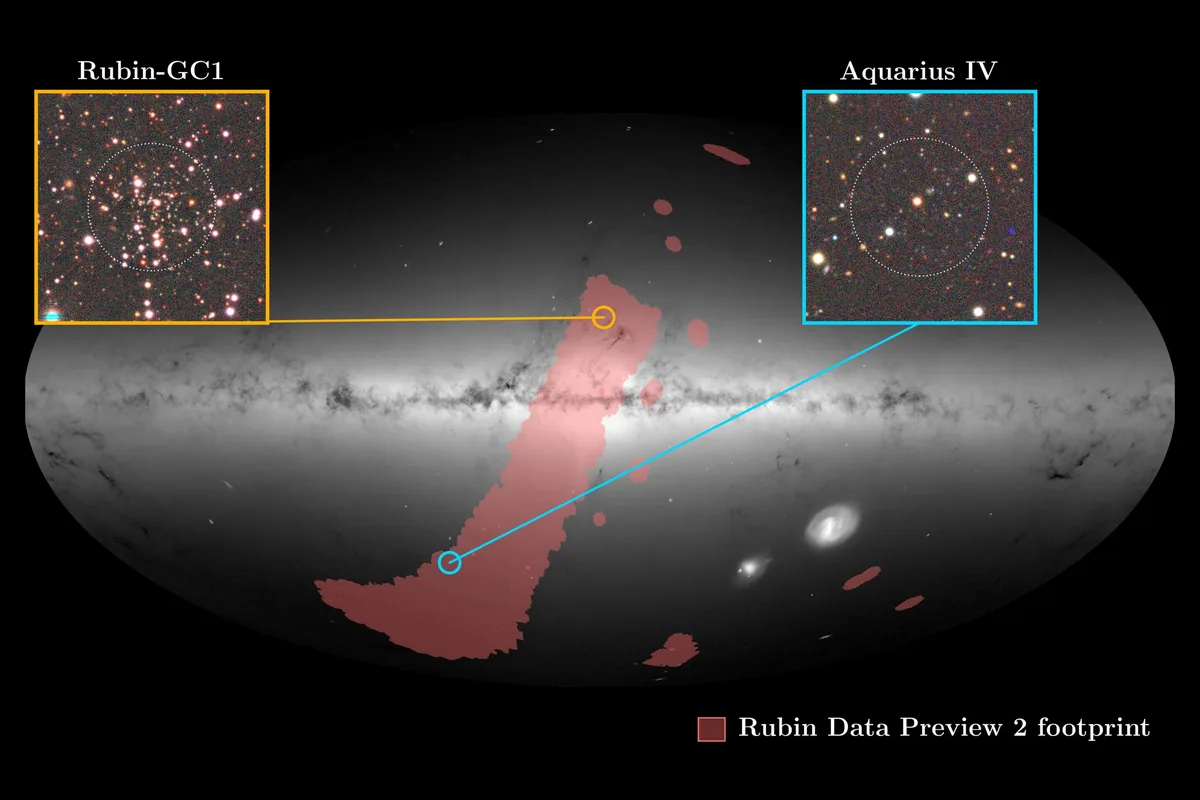
Astronomers continue to uncover faint and elusive structures orbiting the Milky Way that have long escaped detection. In recent observations conducted by the Vera Rubin Observatory, two new dim satellites were identified in the galactic halo. These newly detected celestial objects represent faint structures lingering near the limits of astronomical observation, hidden within the complex gravitational environment of our home galaxy.
An Ultra-Faint Dwarf Galaxy and a Globular Cluster
Analysis reveals that one of the newfound satellites is an ultra-faint dwarf galaxy, while the other is a dense globular cluster. Because of their exceptionally low surface brightness, such systems often blend seamlessly into the dense foreground and background star fields of the sky. Captured through the advanced observational capabilities of the Vera Rubin Observatory, these dim structures serve as lingering remnants of past mergers and tidal interactions experienced by the Milky Way.
Galactic Evolution and the Dark Matter Puzzle
Each newly identified satellite fills in a missing piece of the puzzle regarding the Milky Way's long history of galactic growth and accretion. Mapping out these faint systems provides crucial empirical data to test and refine cosmological models of galaxy formation. Furthermore, understanding the population and dynamics of these satellites offers astronomers vital insights into the distribution of dark matter and its foundational role in assembling cosmic structures.
Comments
Loading comments...