astronews
Settings My profile TR

Phys.orgImportance

JWST reveals a distant galaxy that may let most of its ionizing radiation escape

JWST reveals a distant galaxy that may let most of its ionizing radiation escape
Image: Phys.org

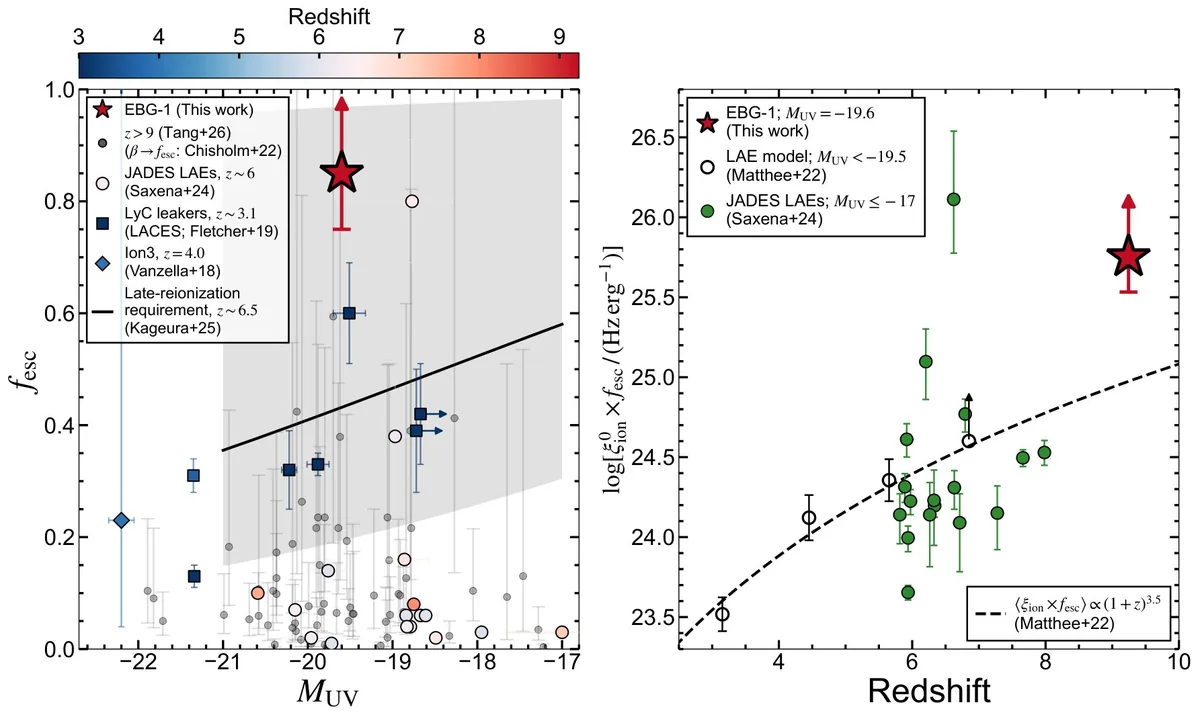
The JWST space telescope has shown that a galaxy from 530 million years after the Big Bang may allow most of its ionizing radiation to escape into space. This galaxy, known as EBG-1, is one of the oldest galaxies formed after the Big Bang.

Background of the Discovery

The JWST space telescope has shown that a galaxy from 530 million years after the Big Bang may allow most of its ionizing radiation to escape into space. This galaxy, known as EBG-1, is one of the oldest galaxies formed after the Big Bang.

Observation Details

The EBG-1 galaxy was observed at a redshift of 9.244, indicating that it is approximately 13 billion light-years away from us. The advanced technology of the JWST allowed for the analysis of the light coming from this distant galaxy.

Scientific Significance of the Discovery

The fact that the EBG-1 galaxy allows most of its ionizing radiation to escape into space may provide important information about how stars and galaxies formed in the early universe. This discovery may contribute to the development of new theories about the formation of the universe.
Read at source
Comment

Something wrong with this story? Report it

Comments

Loading comments...

Choose your city

Sunrise, sunset and the sky chart follow the city you choose.

Pages

NewsFeedSkyObservatorySpacecraftGalleryAcademicAssistantThe weekArchiveAboutMy profileSettings

Topics

Solar SystemMarsMoonSunExoplanetsStarsGalaxiesBlack holesCosmologyComets & asteroidsTelescopesMissionsSky eventsSearch for lifeTürkiye

Legal

Terms of UsePrivacy PolicyKVKK NoticeCookie PolicyPrivacy PreferencesFeedback