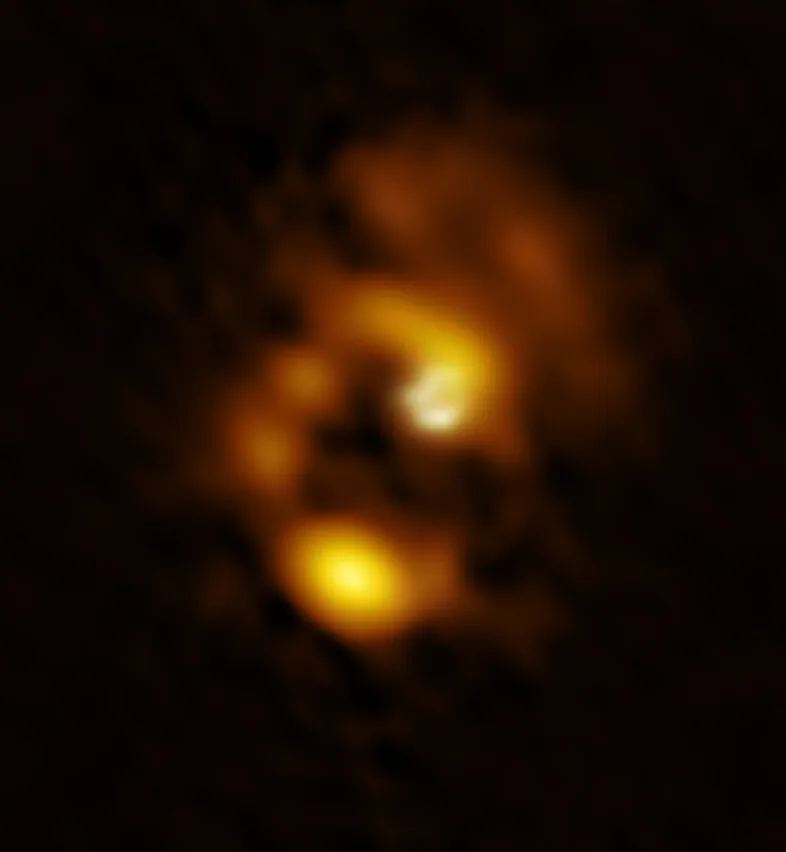
A Detailed Look at Mira A with ALMA
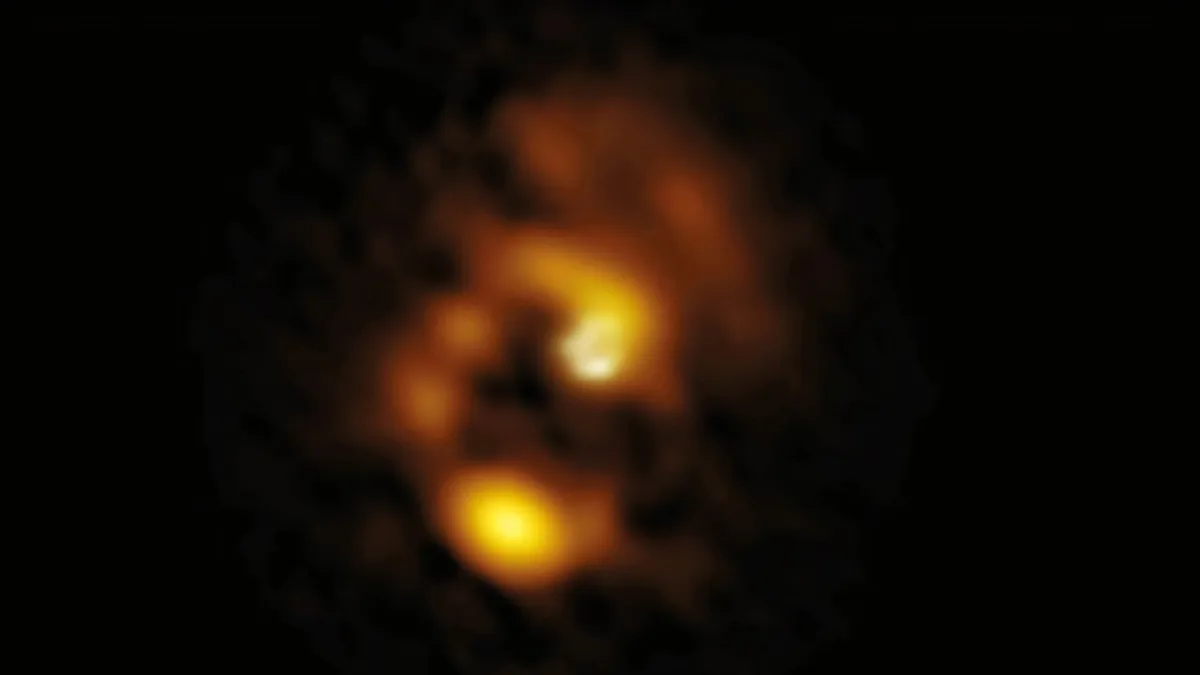
Located roughly 330 light-years away in the constellation Cetus, the red giant star Mira A has been observed in extraordinary detail by the Atacama Large Millimeter/submillimeter Array (ALMA). At the center of the newly released image lies a lumpy, glowing patch representing the actual surface of the dying star. Representing an advanced evolutionary stage for stars similar to our Sun, Mira A's expanded and cooling outer envelope provides an ideal laboratory for submillimeter astronomy.
Giant Ejected Loops and Submillimeter Observations
ALMA's high-resolution interferometric array resolved not only the irregular features of the stellar surface but also a massive loop of material cast far out into surrounding space. These huge structures of ejected gas and dust raise intriguing questions regarding the exact mass-loss mechanisms governing red giant stars. Researchers are analyzing how intense stellar pulsations and convective motions drive such vast, asymmetrical expulsions into the interstellar medium.
Stellar Evolution and Interstellar Enrichment
The asymmetric structures revealed around Mira A are crucial for refining models of stellar life cycles. As low-to-intermediate-mass stars reach the end of their lives, they enrich the surrounding cosmos with heavy elements synthesized deep inside their cores, providing the raw materials for future planetary systems. Continued observations of Mira A with ALMA are expected to clarify the kinematics of this ejected material and map the ongoing loss of the star's outer layers.
Comments
Loading comments...