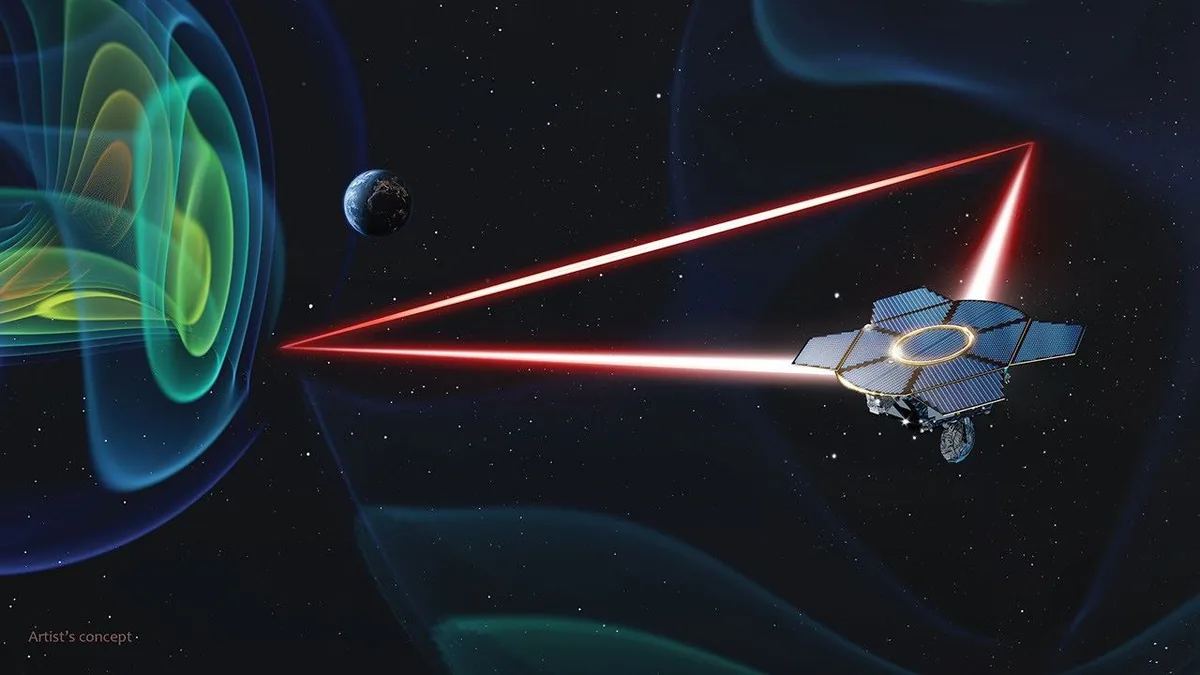
The LISA Mission and Gravitational Waves
The Laser Interferometer Space Antenna (LISA) observatory, currently under development, is designed to detect gravitational waves—tiny ripples in space-time caused by massive orbiting objects. New studies led by NASA astrophysicists demonstrate in detail how LISA could utilize these space-time vibrations to reveal previously unknown cosmic bodies and worlds.
All-Glass Telescope and Prototype Testing
NASA has advanced its contributions to the LISA mission by moving forward with the development of a novel all-glass telescope. Designed and assembled in collaboration with L3Harris Technologies, this specialized optical hardware underwent testing alongside a second early prototype unit recently completed by engineers at NASA's Goddard Space Flight Center in Greenbelt, Maryland.
A New Chapter in Physics and Astronomy
By measuring gravitational waves directly from space, the LISA mission aims to revolutionize our understanding of cosmic structures and hidden masses. Once launched, this space-based observatory will complement traditional optical observations, offering new insights into astrophysics models and the universe's evolution.
Comments
Loading comments...