
Planetary Highlights Across the November Sky
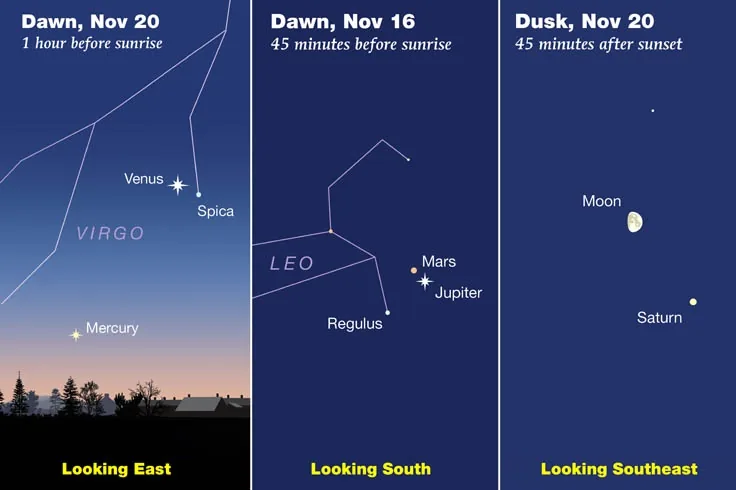
Stargazers and astronomy enthusiasts are treated to an exceptional planetary lineup throughout November. Five of the brightest planets in the Solar System—Mercury, Venus, Mars, Jupiter, and Saturn—reach favorable viewing positions in the night sky. With clear horizons, observers can witness these worlds without the need for specialized observatory equipment, offering a panoramic view of our immediate cosmic neighborhood.
Close Encounters and Horizon Viewing Details
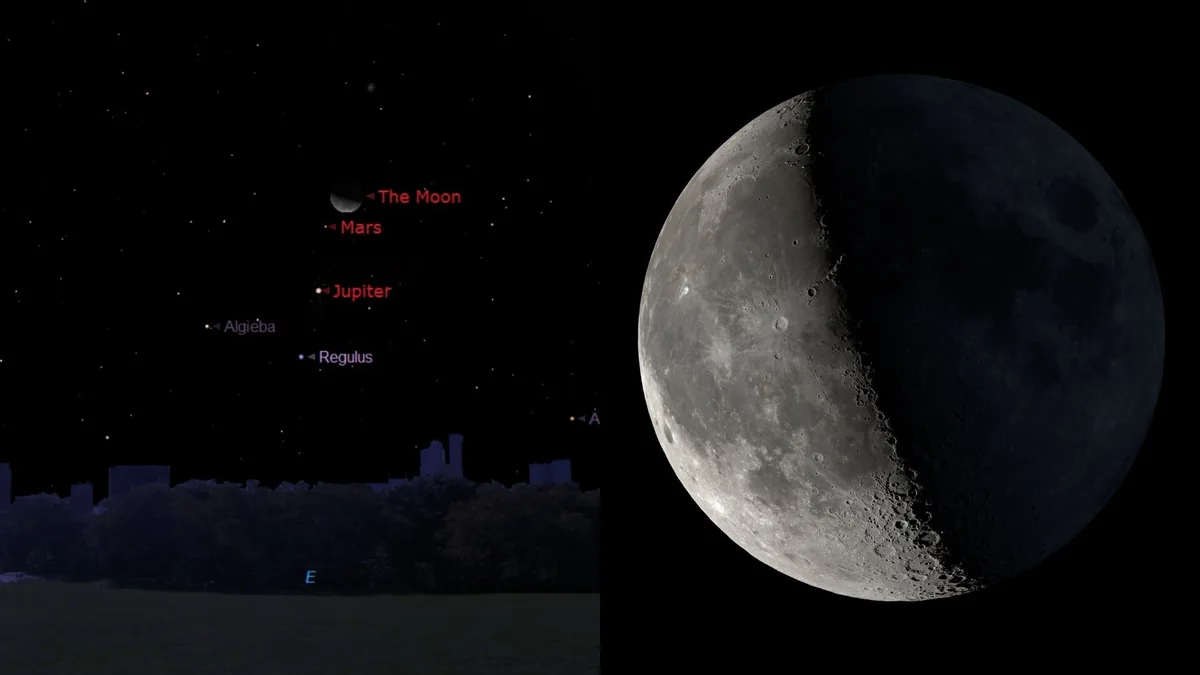
Among the month's most prominent events is the close visual conjunction between the red planet Mars and gas giant Jupiter. As viewed from Earth, their orbital alignment brings them strikingly close across the constellations, providing an extraordinary target for binocular and telescope observations. Concurrently, brilliant Venus commands attention in the dusk twilight, while elusive Mercury demands precise timing low along the horizon shortly before sunrise or after sunset.
Insights into Solar System Orbital Mechanics
Tracking the apparent motion of these planets against the backdrop of distant stars illustrates the fundamentals of orbital mechanics and celestial geometry. For educational initiatives and backyard astronomers, November presents an opportunity to resolve surface details on Mars, observe the atmospheric bands and Galilean moons of Jupiter, and study planetary phases. Ongoing orbital shifts will alter these viewing geometries as the month concludes.

Comments
Loading comments...