Isolation Experience Before Extraterrestrial Missions
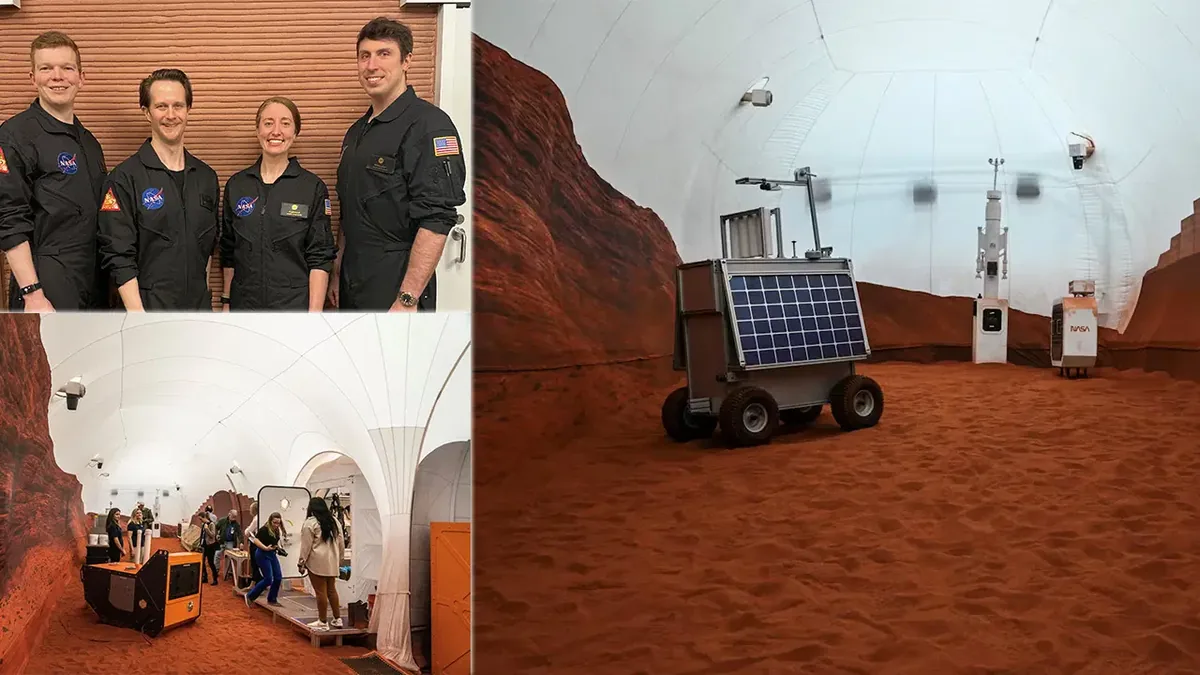
The National Aeronautics and Space Administration (NASA) has completed a major milestone in its simulation studies aimed at preparing for future crewed Mars exploration missions. A four-person team serving as analog astronauts successfully concluded a 378-day isolation period and reunited with the outside world.
The crew consisted of mission commander Ross Elder, science officer Matthew Montgomery, flight engineer James Spicer, and medical officer Ellen Ellis. Upon exiting the habitat, Ellen Ellis noted that as analog astronauts living under voluntary captivity, they had put a truly challenging year behind them.
The 158-Square-Meter Habitat and Technical Details
As part of the CHAPEA 2 (Crew Health and Performance Exploration Analog) simulation mission, the crew resided in a specially constructed facility. The living habitat consisted of a 158-square-meter enclosure fabricated using 3D printing technology.
The four crew members lived completely isolated from the outside world within this 158-square-meter space for exactly 378 days. Throughout the mission, the team's health and performance metrics were closely monitored to simulate conditions of human spaceflight to Mars.
Impact on Future Human Mars Exploration
Speaking after emerging from isolation, mission commander Ross Elder highlighted the inherent risks of traveling to Mars. This extended isolation study aims to better understand the physical and psychological challenges crew members might face prior to a human mission to the Red Planet.
The data collected during the CHAPEA simulation program will directly inform risk analyses and operational planning for NASA's future human exploration missions to Mars.
Comments
Loading comments...