A New Era for Autonomous Planetary Landings
NASA has successfully demonstrated a cutting-edge navigation system designed to enable future spacecraft to autonomously guide themselves to safe landing zones on the Moon and other planetary surfaces. Landing remains one of the most perilous phases of any planetary exploration mission. This newly developed guidance and control infrastructure is engineered to perform real-time surface hazard mapping, detect boulders or steep slopes, and independently divert the vehicle toward a safe touchdown point without relying on human control.
Simulated Lunar Descent with the SPLICE Payload
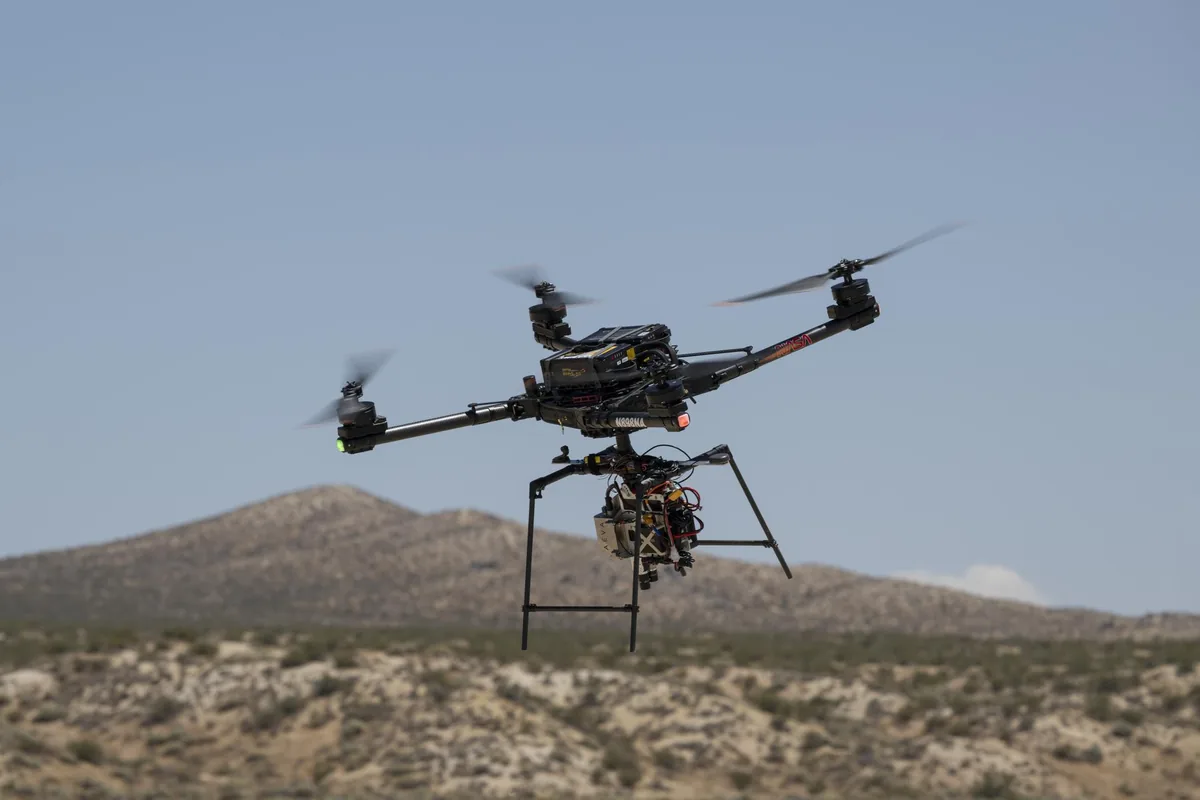
The field test utilized NASA's Safe and Precise Landing – Integrated Capabilities Evolution (SPLICE) guidance, navigation, and control payload. Integrated onto a high-performance Alta-X drone, the system underwent a complex simulated lunar descent and landing test on August 27. Throughout the flight, the drone executed intricate descent maneuvers and executed autonomous hazard-avoidance protocols designed to mimic the conditions of landing on the lunar surface.
Impact on Future Planetary Exploration
The high-precision optical sensors and advanced real-time algorithms developed under the SPLICE project are slated to play a vital role in upcoming Artemis lunar missions. By granting spacecraft the ability to land precisely even in heavily cratered or shadowed terrains, this technology significantly mitigates mission risks for future robotic and crewed exploration missions to the Moon, Mars, and beyond.
Comments
Loading comments...