A Peculiar Discovery Beyond Galactic Dust
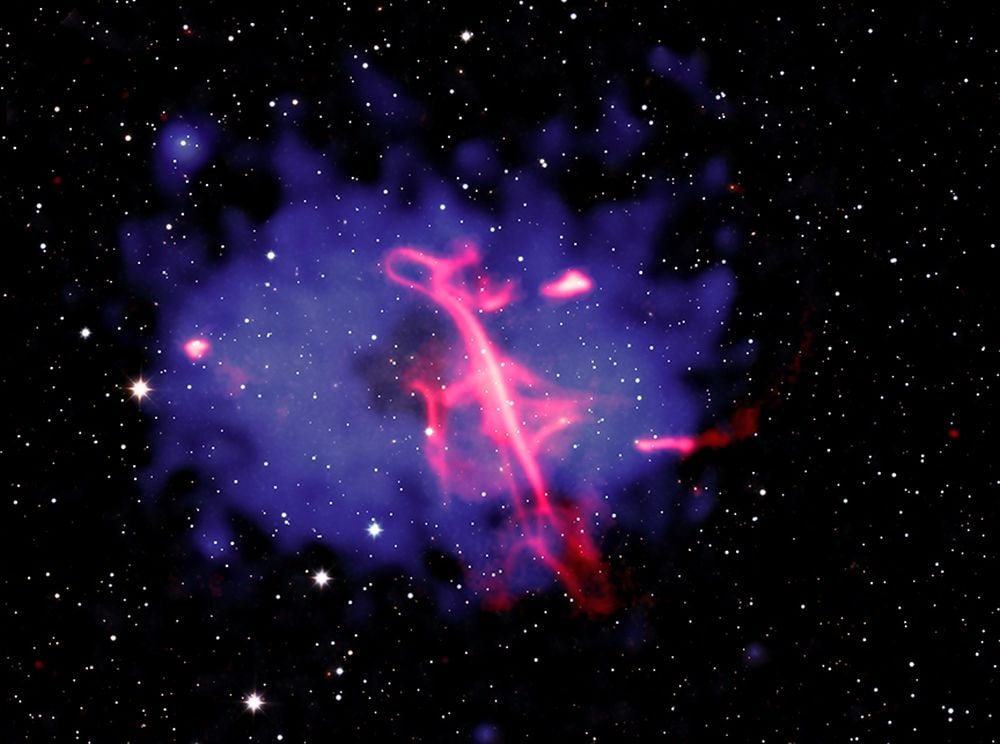
Years ago, astronomers spotted an unusual radio structure lurking beyond the Milky Way's "Zone of Avoidance"—the region of the sky obscured by the dense gas, dust, and stars of our own galaxy's disk. The structure closely resembled a musical treble clef, earning it a lasting nickname among researchers. Due to severe galactic foreground interference, unraveling the origin and physical nature of this distant feature remained a major challenge for years.
Unveiling the Radio Phoenix Mechanism
Fresh investigations into the enigmatic feature have finally shed light on its astrophysical origins. New research reveals that the Treble Clef is an exquisite example of a "radio phoenix." Radio phoenixes are rare, diffuse radio sources that emerge when fossil electron clouds, previously expelled by active galactic nuclei or supermassive black hole jets, are compressed and revived by shock waves traveling through the intracluster medium.
Radio observations demonstrate that the characteristic looping shape originated as dormant relativistic plasma was re-energized. High-resolution mapping in radio frequencies allowed astronomers to trace the shock compression and magnetic field alignment responsible for forging the musical notation-like shape.
Implications for Large-Scale Cosmic Structures
Identifying the Treble Clef as a radio phoenix provides critical insights into the dynamics of galaxy clusters hidden behind the Milky Way. Mapping these obscured systems contributes directly to our understanding of how cosmic shock waves dissipate energy and accelerate particles on megaparsec scales.
Scientists anticipate that future deep radio surveys will uncover additional fossil plasma structures, providing a clearer timeline of past galactic active phases and cluster merger histories throughout cosmic time.


Comments
Loading comments...