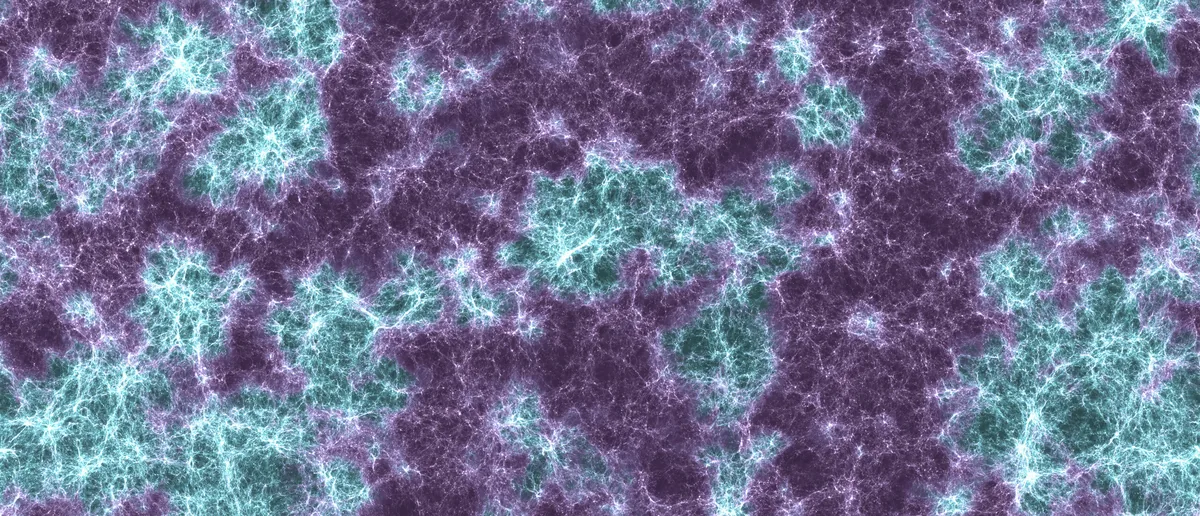
A Giant Step Toward Understanding the Early Universe
The James Webb Space Telescope (JWST) and the Nancy Roman Space Telescope are revealing the universe's earliest chapters in unprecedented detail. To accurately interpret the complex observational data gathered by these powerful observatories, astronomers require advanced theoretical models and high-resolution cosmological simulations.
Technical Power and Scope of the Lumina Simulation
In response to this need, researchers at the Center for Astrophysics | Harvard & Smithsonian have developed Lumina, a massive digital simulation. Lumina stands as one of the largest and most detailed simulations ever created of the early universe, modeling the formation of the first cosmic structures and galaxies with high precision.
A Scientific Benchmark for Space Telescopes
This new simulation serves as a vital benchmark for comparing and validating deep-space observations. By simulating the physical conditions of the cosmos's infancy, Lumina enables scientists to test cosmological models, enhancing both current James Webb data analysis and future Nancy Roman Space Telescope observational missions.
Comments
Loading comments...