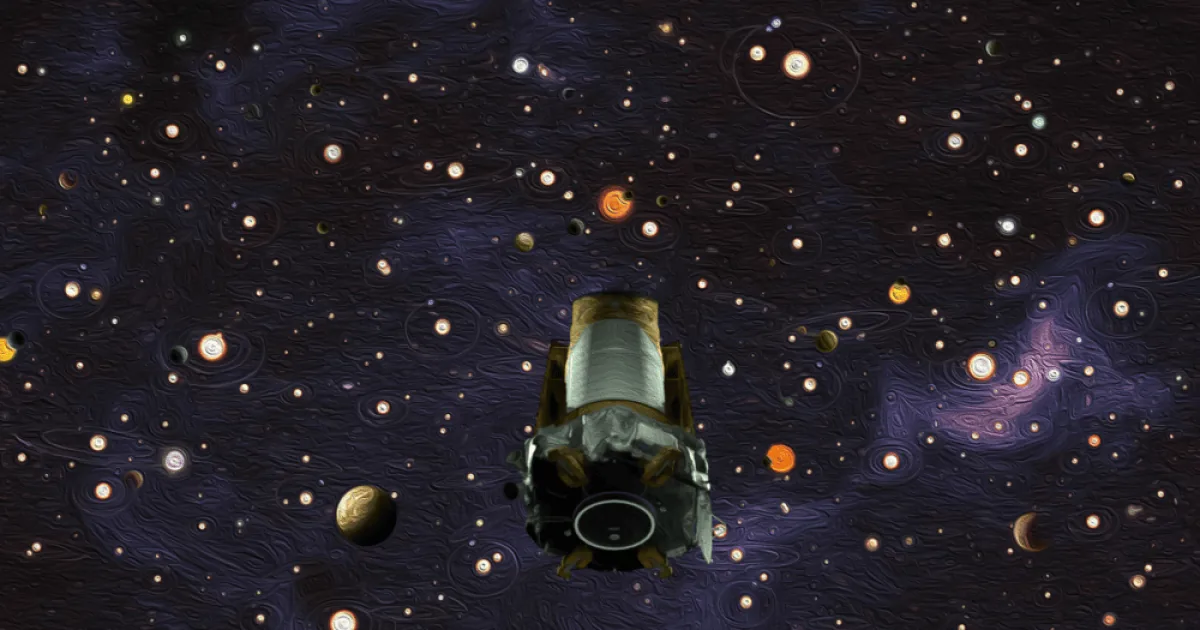
Background of the Kepler Mission and NASA's Extension
Designed by NASA to explore planetary systems in the Milky Way and detect Earth-like exoplanets, the Kepler Space Telescope was launched on March 6, 2009. Having successfully completed its primary mission originally planned for 3.5 years, NASA officially announced on November 14, 2012, that it had approved a mission extension for the space telescope, opening a new chapter in space observations.
Observation Methods and Technical Data
The Kepler Space Telescope utilized a precise technique known as the 'transit method' to search for exoplanets. This method relies on measuring the tiny dips in a star's brightness when a planet passes in front of it. Over its operational lifetime, Kepler ultimately observed more than 500,000 stars, contributing to the discovery of almost 2,700 exoplanets through its vast collected dataset.
Scientific Significance and Impact on Astronomy
The data acquired by Kepler revolutionized our understanding of the abundance and diversity of planets across our galaxy. The mission extension provided scientists with the extra observation time required to confirm smaller, rocky planets orbiting in potentially habitable zones. Kepler's comprehensive exoplanet catalog formed the bedrock of modern exoplanetary science and serves as a primary reference for future space missions.


Comments
Loading comments...