The Century-Old Coronal Heating Problem
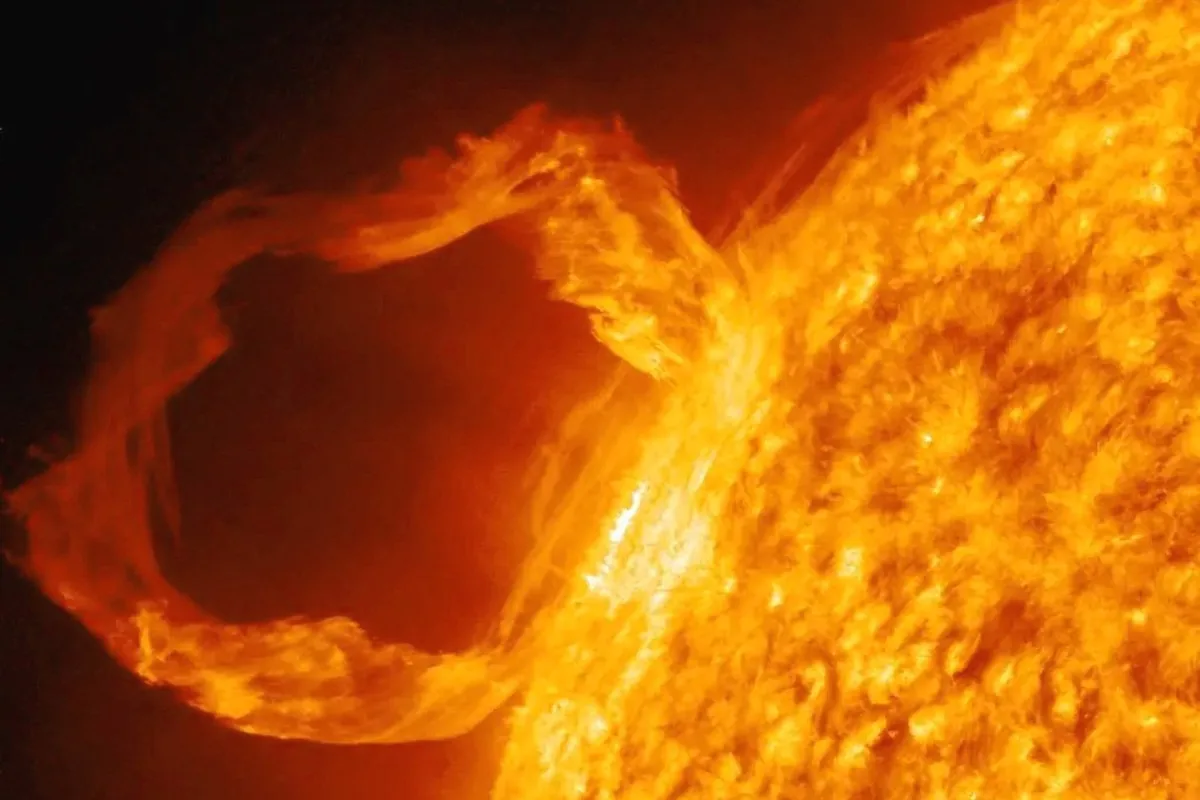
The coronal heating mystery remains a central paradox in solar physics: while the Sun's visible surface hovers around 5,500 degrees Celsius, its tenuous outer atmosphere, the corona, scorches at millions of degrees. Theorists have long hypothesized that ubiquitous, small-scale magnetic reconnections termed 'nanoflares' provide the missing thermal input.
Recreating Solar Dynamics in the Lab
In a controlled experimental breakthrough, researchers succeeded in synthesizing miniature flare events mimicking conditions in the solar atmosphere. By generating these localized plasma instabilities, the team directly traced how magnetic field reconfiguration rapidly transforms stored magnetic energy into intense kinetic and thermal heat.
Validating Theoretical Solar Models
The quantitative measurements demonstrate that the cumulative energy released by pervasive nanoflares is sufficient to sustain the superheated temperatures observed in the solar corona. This milestone bridges observational astrophysics with laboratory plasma physics, substantially advancing our grasp of stellar atmospheres and space weather drivers.
Comments
Loading comments...