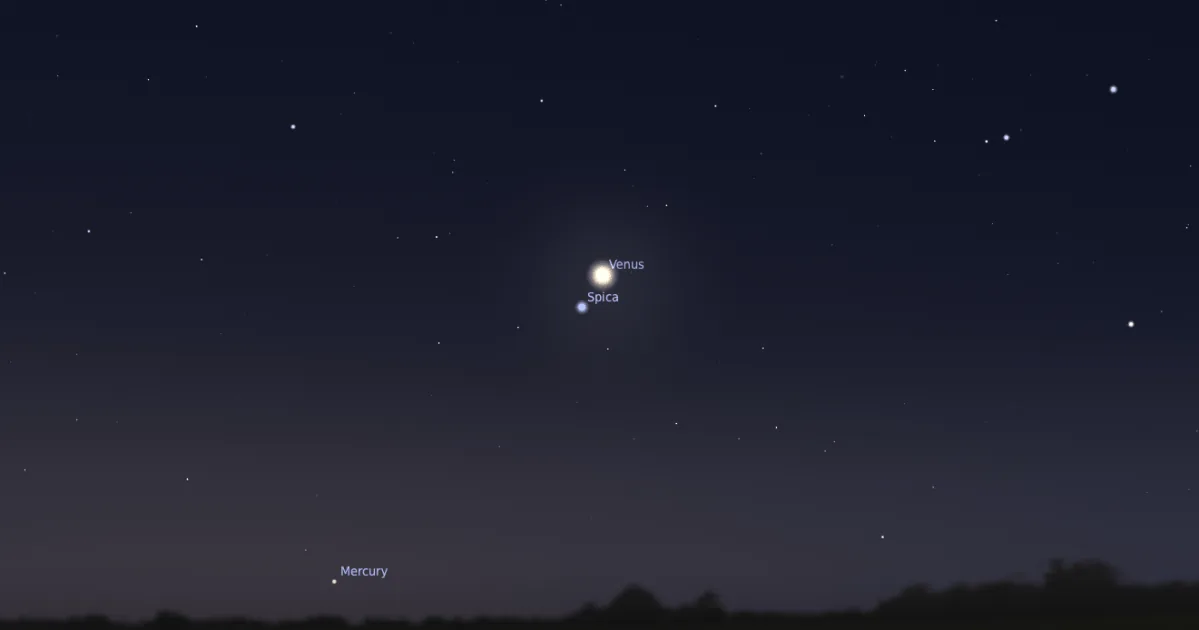
A Stationary Moment Among the Stars of Virgo
Venus, the brightest planet in the night sky, has arrived at a distinct geometric juncture in its orbital journey as seen from Earth. According to astronomical observation data, the planet reached a stationary point among the background stars of the constellation Virgo at 10 A.M. EST. This celestial occurrence provides astronomers and stargazers with a direct demonstration of the orbital dynamics and apparent shifts of planetary paths.
Conclusion of Retrograde and Return to Prograde
Over recent weeks, Venus had been tracing an apparent westward or retrograde trajectory across the celestial sphere. Driven by the relative orbital speeds of Earth and Venus around the Sun, this retrograde interval has officially ceased with the arrival at the stationary point. Following this pause, Venus is beginning to move eastward in prograde motion once again, altering the direction of its path across the sky.
Orbital Geometry and Stargazing Implications
The transition marked by Venus highlights the classic looping patterns exhibited by planets when observed from Earth's moving reference frame. Because inner planets orbit the Sun faster than Earth, they periodically appear to slow, halt, and reverse their apparent direction across the background constellations. As Venus swings eastward into prograde motion, observers will track its shifting coordinates relative to neighbouring stars and other celestial phenomena.
Comments
Loading comments...