
Hubble's Observations of Dwarf Galaxies
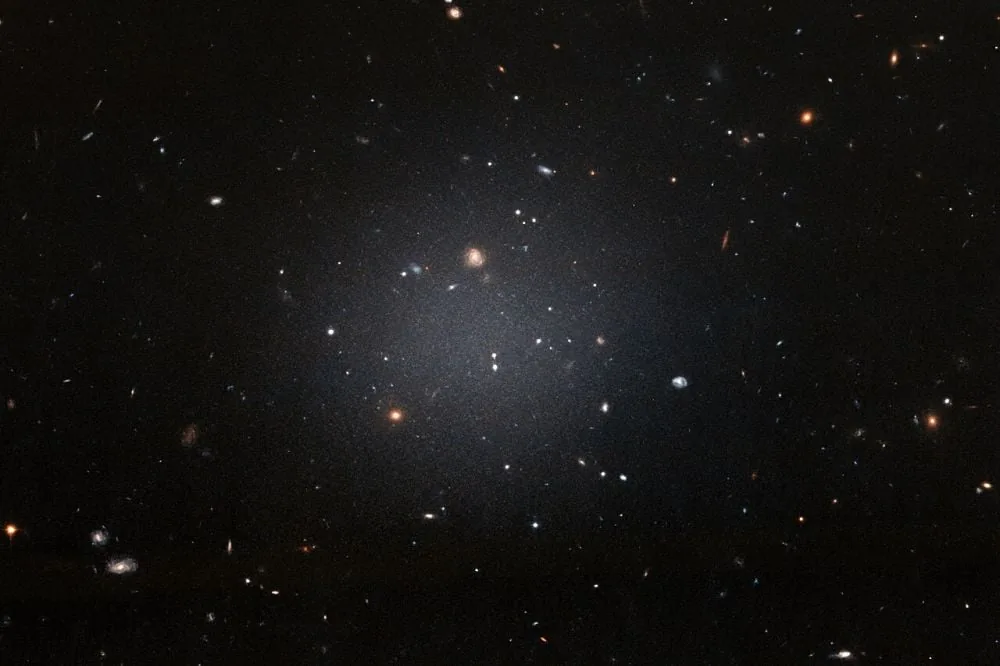
Researchers using NASA's Hubble Space Telescope conducted a comprehensive survey of 37 nearby dwarf galaxies to better understand galactic evolution. Among the systems studied is NGC 4449, an irregular dwarf galaxy containing active star-forming regions. Dwarf galaxies are small-scale cosmic structures containing anywhere from a few thousand to hundreds of millions of stars.
Spectral Measurements and Missing Oxygen
Spectral measurements and light analysis conducted across these galaxies revealed an unexpected chemical discrepancy. Researchers found that much of the oxygen expected to be present based on stellar evolution models was missing. This significant oxygen deficit was consistently identified across NGC 4449 and the other 36 nearby dwarf galaxies.
Impact on Galactic Evolution Models
The discovery of missing oxygen challenges current understanding regarding gas flows and stellar feedback in low-mass galaxies. How heavy elements are ejected from dwarf galaxies or obscured from detection presents a new cosmic puzzle for astrophysicists. Further observations and theoretical modeling are planned to solve this galactic mystery.
Comments
Loading comments...