The First Major Test of General Relativity
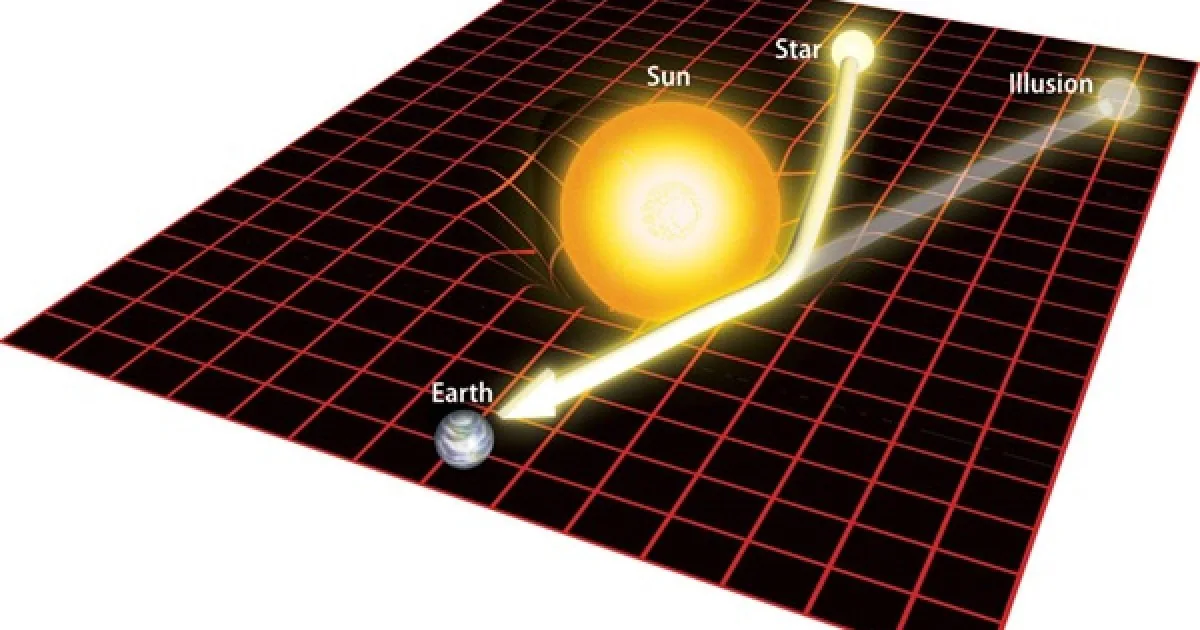
Just four years after Albert Einstein published his general theory of relativity, one of the most decisive experimental tests in modern physics took place. During the total solar eclipse of May 29, 1919, British astronomer Sir Arthur Eddington and his colleagues set out to observe whether the Sun's gravitational field would warp space-time and bend passing light from distant stars.
Solar Eclipse Observations and Light Deflection
Utilizing the brief darkness of the total solar eclipse, the research team took precise measurements of background stars situated close to the Sun's edge. According to general relativity, any massive object distorts the surrounding space-time fabric, causing light rays to deviate from a straight path. Eddington's measurements confirmed that light from background stars was deflected by the Sun by the exact amount predicted by Einstein's equations.
November 6, 1919: A Historic Turning Point in Physics
Following comprehensive data analysis, the official announcement was made on November 6, 1919, confirming that Einstein was right. This landmark result revolutionized the understanding of gravity, superseding classical Newtonian physics and laying the foundation for modern cosmology. The empirical verification of light deflection remains a cornerstone for current astrophysics, enabling research into black holes and gravitational lensing.



Comments
Loading comments...