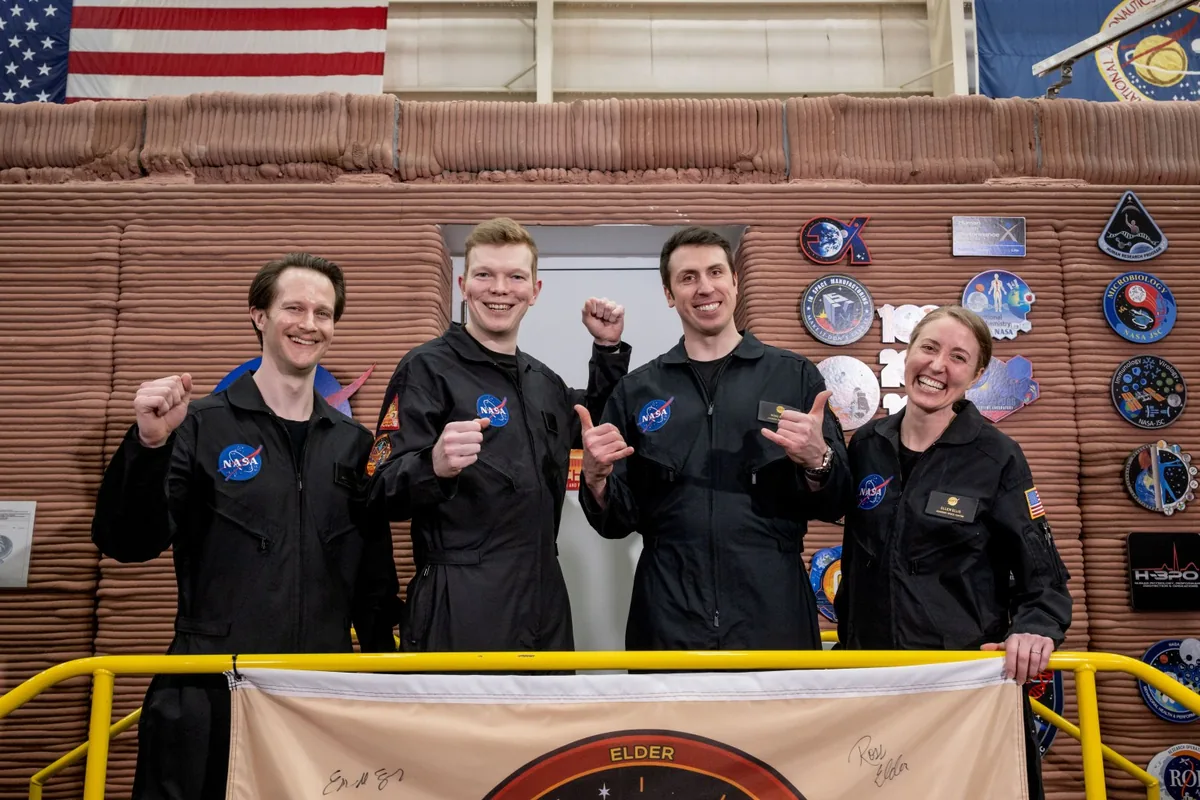
Life on Simulated Mars: CHAPEA Mission Ends
NASA has completed its second yearlong Mars surface simulation mission. On Oct. 31, a four-member crew of research volunteers stepped out of NASA's Mars Dune Alpha habitat, concluding 378 days of intense isolation. The crew, consisting of Ross Elder, Ellen Ellis, James Spicer, and Matthew Montgomery, spent over a year experiencing simulated Red Planet living conditions on Earth.
A 3D-Printed Habitat and Extreme Isolation
The Mars Dune Alpha structure, where the volunteers spent 378 days, is a roughly 1,700-square-foot habitat built using 3D-printing technology. During the mission, the crew lived in a windowless environment, completely cut off from the sounds of the outside world. They also operated without any real-time calls with family and friends, mimicking the communication limitations of a real Mars expedition.
Scientific Importance for Future Mars Expeditions
This second yearlong surface simulation conducted by NASA provides valuable insight into the operational and human factors of long-duration space travel. By studying crew experiences under windowless and real-time communication-restricted conditions, NASA gains vital data to design future human missions to the Martian surface.
Comments
Loading comments...