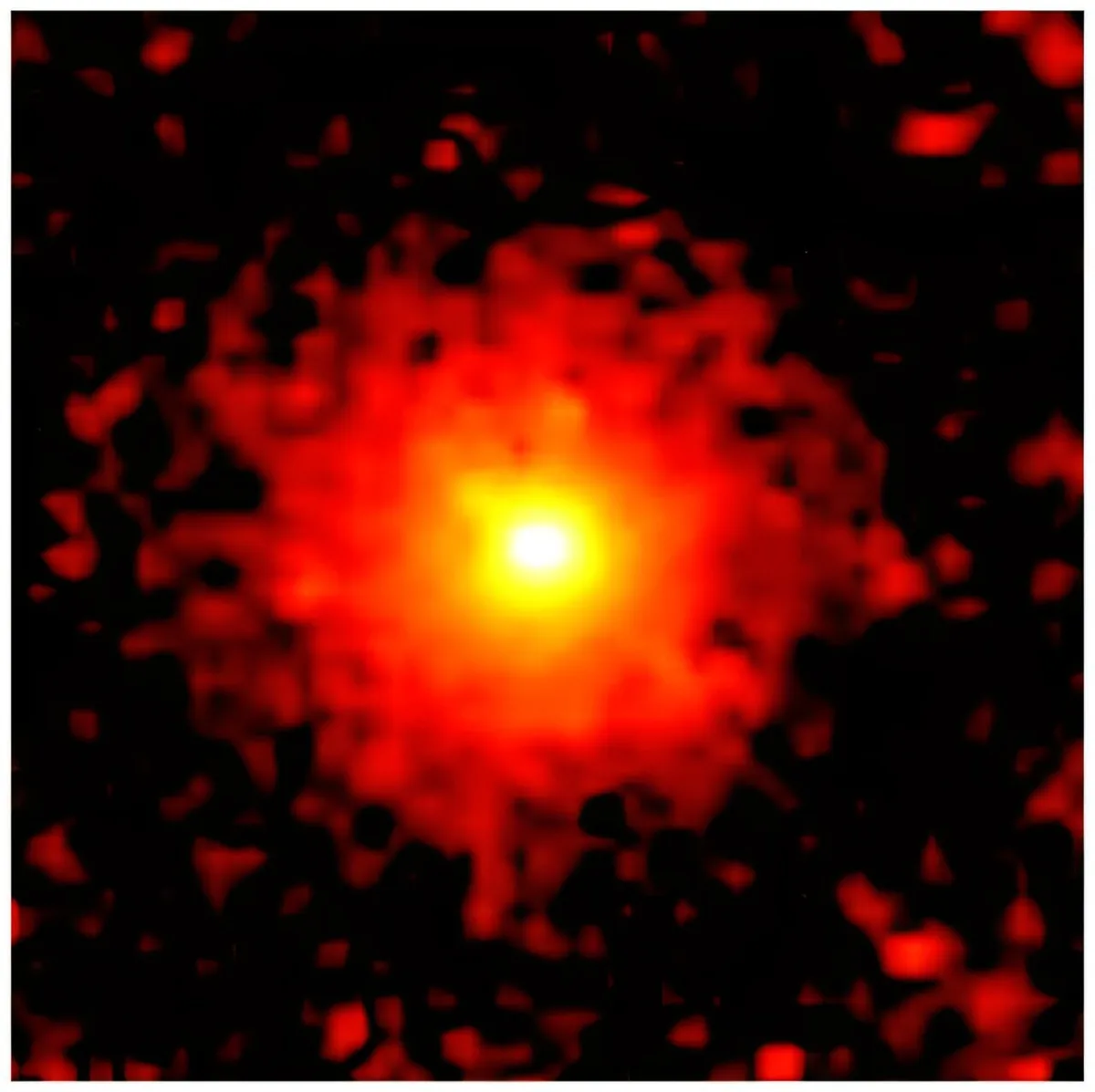
An Interstellar Visitor's Long Journey
The interstellar comet 3I/ATLAS brought pristine material originating from another planetary system directly within reach of Earth's telescopes, offering astronomers an unprecedented observational opportunity. Yet deciphering the true origins of such exotic objects poses major challenges. Having drifted through interstellar space for eons, the comet arrived in our cosmic neighborhood only to raise fundamental questions about whether its detected composition truly represents its native birthplace.
Energetic Particles and Solar Weathering
During its vast transit across deep space, energetic particles bombarding the comet likely modified its outermost layers. Furthermore, as 3I/ATLAS approached the Sun, solar radiation may have stripped away meters of volatile surface material. Consequently, astronomers face an intricate puzzle: the gases and volatile dust grains currently being measured by spectral instruments might largely reflect space weathering and solar alteration rather than the comet's primordial reservoir.
Deciphering Foreign Planetary Systems
If the outer strata have been heavily altered or stripped away, deciphering the conditions of the distant system where 3I/ATLAS formed requires untangling these external evolutionary effects. Researchers are refining computational models to distinguish between cosmic ray weathering, solar stripping, and authentic primordial chemistry. These efforts are essential to ensure that future detections of interstellar interlopers provide accurate insights into the birth environments of other worlds.
Comments
Loading comments...