A Historic Milestone for the Hubble Space Telescope
The Hubble Space Telescope has achieved a major astronomical milestone in the study of rocky exoplanets. For the first time, the telescope successfully directly measured the decrease in brightness caused by a rocky planet passing behind its host star, opening a new chapter in secondary eclipse observations.
Secondary Eclipse of the Lava World TOI-2431b
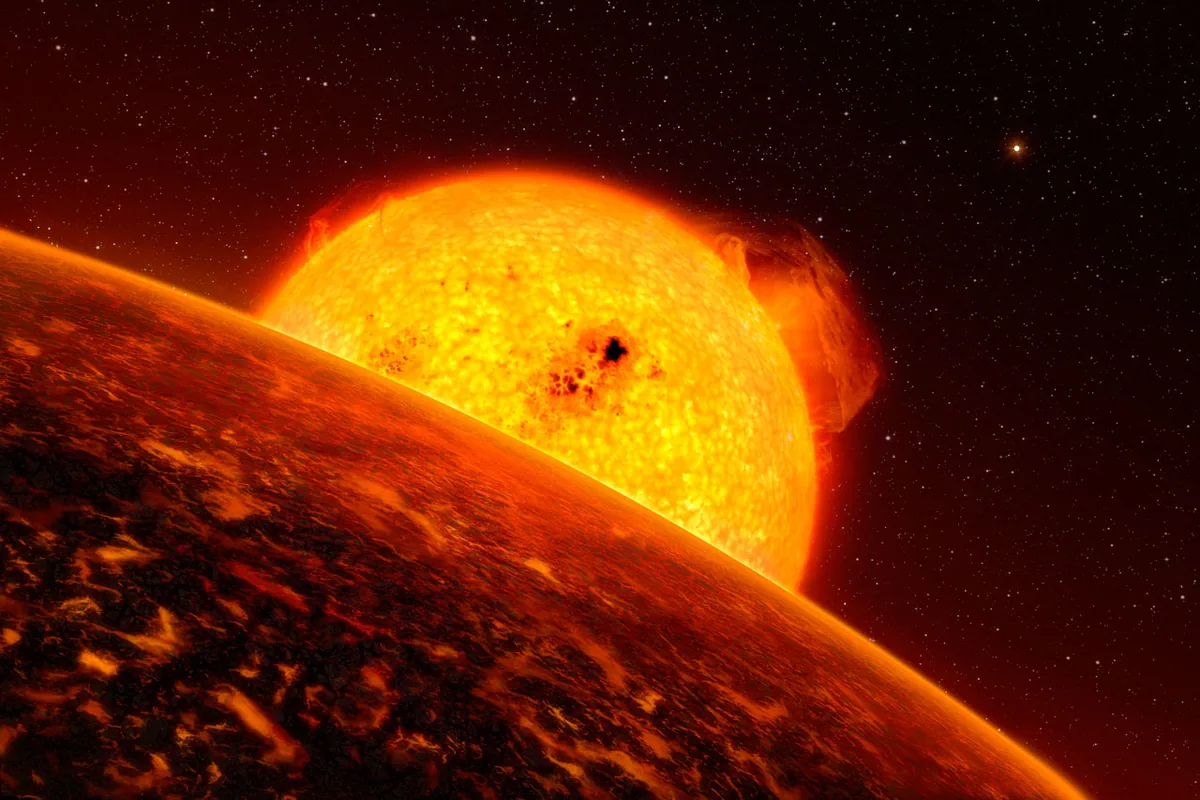
The observation focused on the lava world TOI-2431b, known for its extreme molten surface. During the secondary eclipse when the planet passed behind its host star, a precise drop in total system brightness was detected, yielding critical scientific data about the planet.
A New Perspective on Rocky Exoplanet Studies
This first detection offers a unique opportunity to better understand the thermal emissions and surface properties of rocky exoplanets under extreme conditions. Scientists plan to use these fresh Hubble data to model the atmospheric and structural characteristics of TOI-2431b and similar hot, rocky worlds.
Comments
Loading comments...