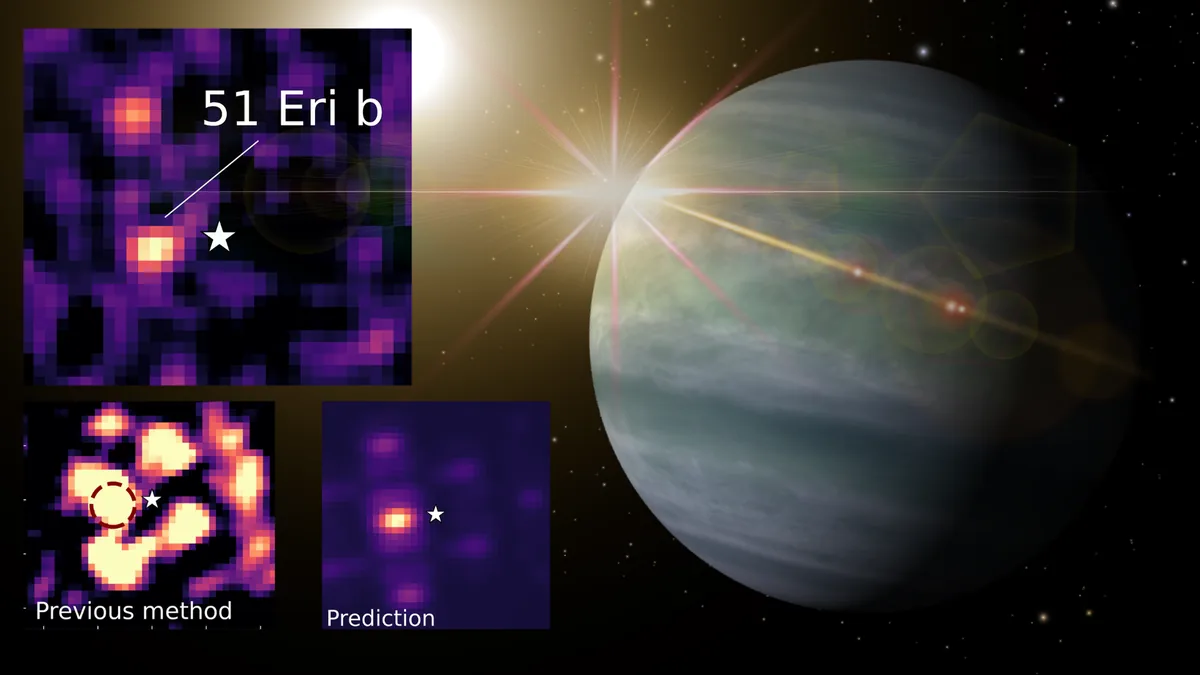
Direct Imaging Revolution with James Webb
One of the greatest challenges in exoplanet research is that planets are often drowned out by the overwhelming glare of their host stars. Because stars shine millions of times brighter than the gas giants orbiting them, detecting the faint light emitted or reflected by a planet requires extraordinary technical precision. The James Webb Space Telescope (JWST) continues to overcome this barrier using its advanced infrared instrumentation.
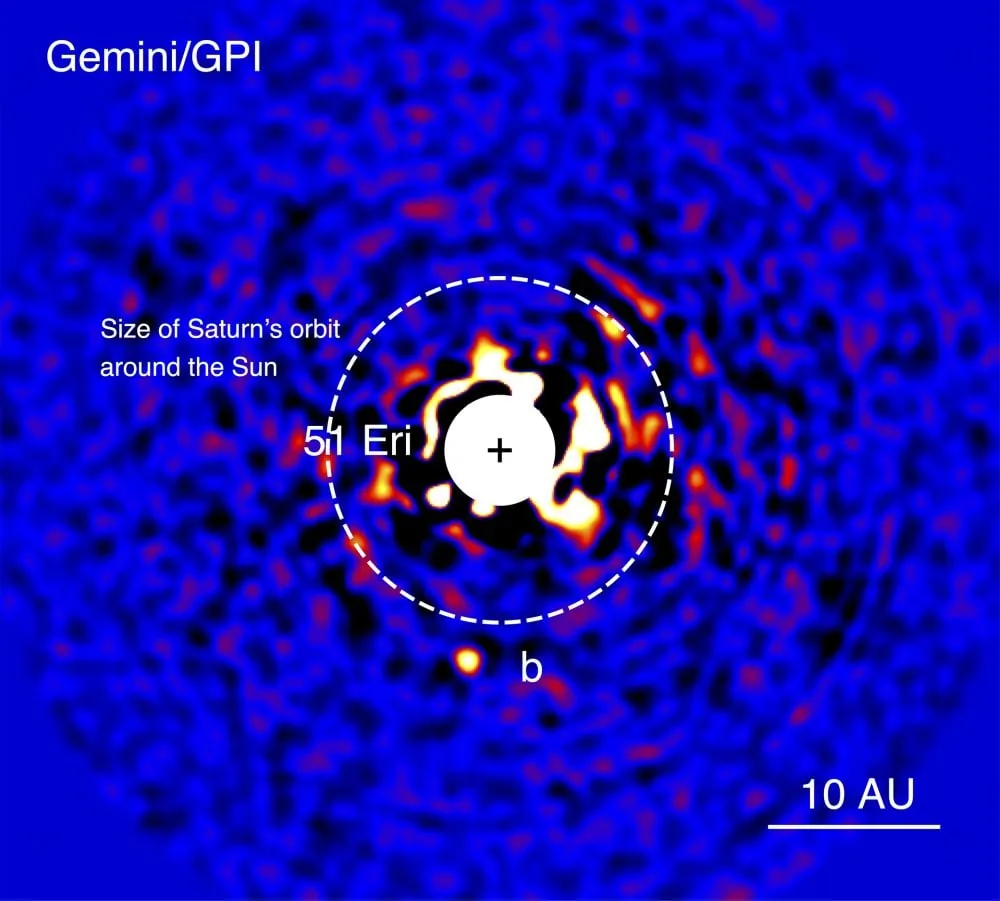
By deploying JWST's high-resolution coronagraphic capabilities alongside specialized data-processing algorithms, astronomers successfully suppressed the intense starlight. With the stellar light masked away, a giant exoplanet emerged clearly from the darkness for the first time.
Starlight Filtering Technique and Infrared Measurements
During the observation process, the telescope's infrared camera and coronagraphic masks were actively utilized. Through the starlight suppression technique, the inherent thermal infrared radiation emitted by the giant exoplanet was directly recorded. This approach allows scientists to directly analyze the planet's atmospheric structure and temperature profile.
The resulting spectral data and wavelength measurements provide unprecedented insights into the planet's mass, orbital characteristics, and atmospheric composition. Filtering out the bright starlight flare successfully isolated the planet's own radiation from the stellar background noise.
A New Era in Understanding Exoplanetary Systems
Directly imaging a giant exoplanet with such clarity marks a major milestone for planet formation theories and atmospheric modeling. This achievement aids our understanding of how gas giants in wide orbits form and cool over time.
Looking ahead, the research team aims to apply these JWST filtering techniques to image smaller, terrestrial exoplanets directly. This methodology will play a pivotal role in searching for potentially habitable planetary systems across the universe.
Comments
Loading comments...