
A Cosmic Nursery Behind Dust Veils
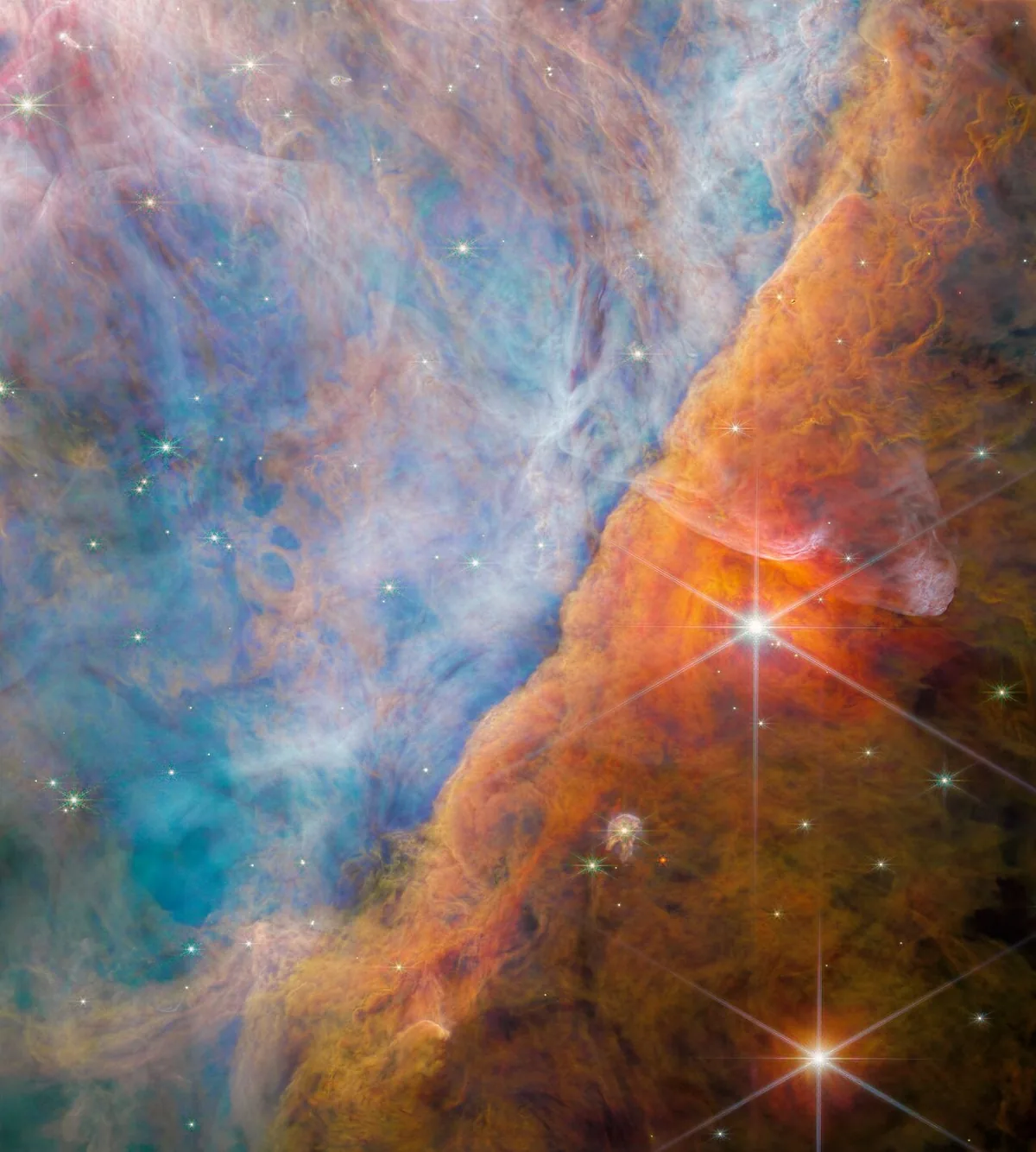
NASA's James Webb Space Telescope continues to illuminate the complex processes of star birth across the cosmos. An image released on October 6, 2026, reveals a dynamic cosmic cauldron in NGC 7129, a stellar nursery located approximately 3,300 light-years from Earth. Utilizing Webb's infrared capabilities, astronomers have unveiled numerous young stars that were previously completely obscured by dense clouds of cosmic dust.
Infrared Observations and Energetic Stellar Jets
NGC 7129 is an intensely active environment where newborn stars sculpt their surrounding natal cocoons. Webb penetrated the thick molecular gas that blocks visible light, mapping the powerful stellar jets and shocks propelled by embryonic stars into the surrounding medium. These energetic outflows demonstrate how developing protostars accrete surrounding matter while simultaneously driving material back out into the interstellar cloud.
Insights into the Formation of Stars and Planets
The detailed structures captured by Webb provide essential insights into the early evolutionary phases of stars and their circumstellar environments. Examining energetic outflows in nurseries like NGC 7129 helps researchers model how stars like our Sun and their planetary systems initially coalesce. Scientists plan to use these infrared datasets to refine theoretical models of mass accretion and feedback mechanisms in star-forming regions.
Comments
Loading comments...