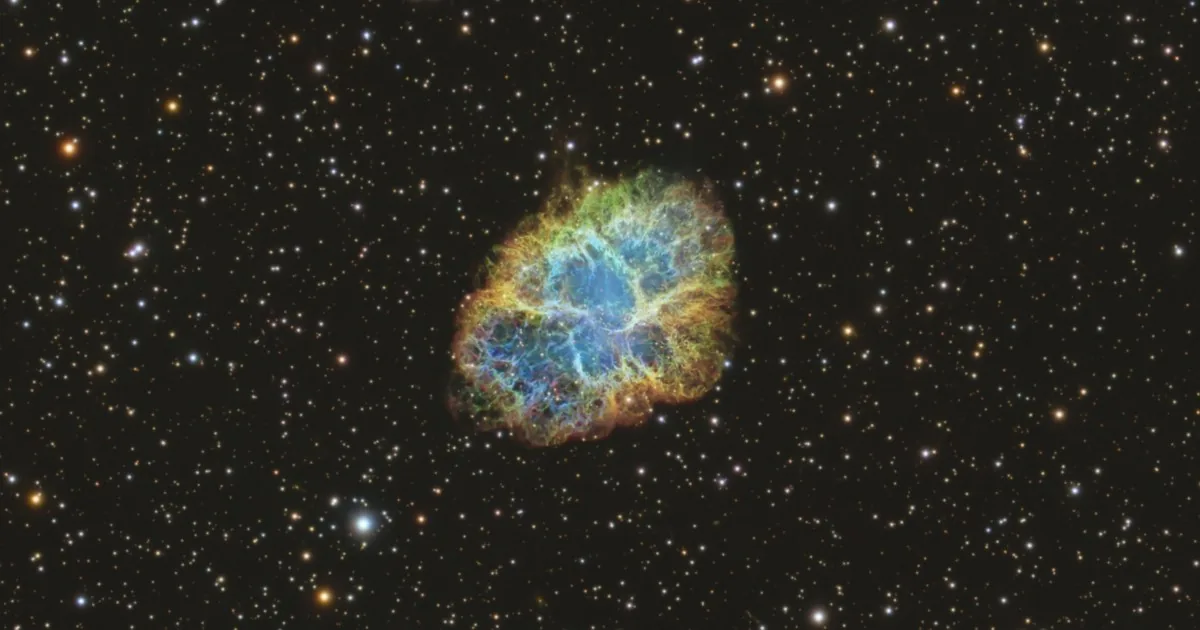
Number One in the Messier Catalog
One of the favorite targets for night sky observers, the Crab Nebula (M1), holds the very first spot on one of astronomy's most famous catalogs. Compiled by astronomer Charles Messier, the list places this deep-sky object at No. 1, although the catalog was not ordered by how visually striking or spectacular the objects appear.
Holding the top position in Messier's compilation of fuzzy celestial objects gives the Crab Nebula a truly symbolic status in the history of amateur and professional astronomy.
Visual Appearance and Small Telescope Observations
Visually speaking, the Crab Nebula does not immediately reveal its intricate structure through most small optical telescopes. When viewed through standard amateur instruments, the object generally appears as a subtle, faint gray blob or a slightly spiky gray patch against the dark sky.
While revealing vibrant colors and detailed gaseous filaments requires advanced imaging equipment or long exposure photography, simply capturing this faint gray patch in an eyepiece is a rewarding milestone for observers.
Significance for Stargazers and Sky Studies
The visually understated nature of the Crab Nebula in small scope eyepieces does not lessen its status among sky enthusiasts. Being the first entry in Charles Messier's iconic catalog ensures that it remains one of the most frequently targeted objects in star charts.
Observing objects like M1 allows both amateur and experienced stargazers to test their instruments while keeping historical skywatching traditions alive. Future observational sessions will continue to highlight this famous nebula.
Comments
Loading comments...