Background of Cosmic Hydrogen Research
Understanding the large-scale structure of the universe and charting cosmic matter distribution remain primary goals in modern cosmology. The MeerKLASS Collaboration, an international research initiative, has achieved a critical milestone in the ongoing efforts to map the cosmos. Scientists involved in this collaboration utilize advanced astronomical observation techniques and radio instruments to trace how cosmic hydrogen is distributed throughout space. This international effort plays a pivotal role in refining theoretical cosmological models and expanding our understanding of cosmic evolution.
Observational Details and Measurement Data
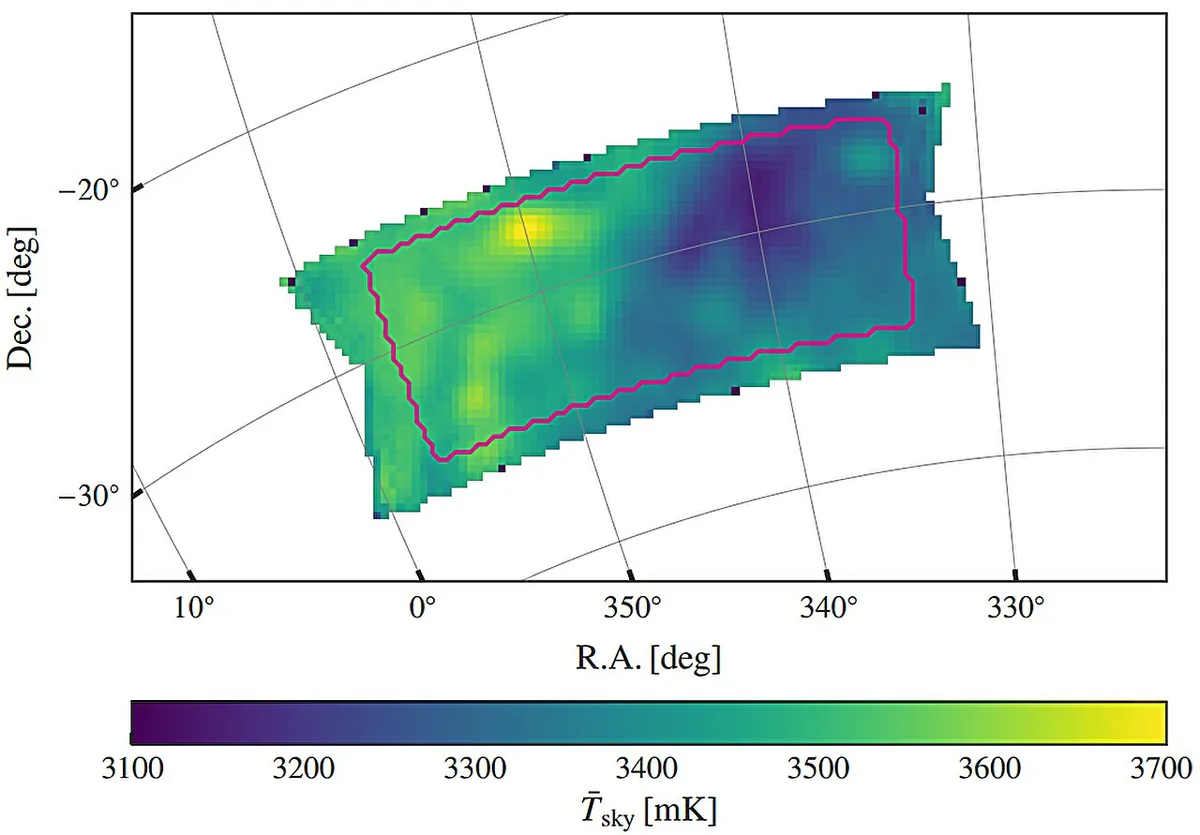
In this landmark study, the MeerKLASS Collaboration reported its first successful measurement of the large-scale clustering of cosmic hydrogen. Researchers utilized specialized radio frequency detection methods and spectrum observations to isolate the faint signals emitted by cosmic hydrogen across vast distances. This initial measurement successfully mapped the density fluctuations and clustering patterns of neutral cosmic hydrogen. The resulting observational data provides a robust foundation for verifying complex cosmological spatial distribution models.
Scientific Significance and Cosmological Impact
This breakthrough measurement of cosmic hydrogen clustering has the potential to transform how cosmologists chart and understand the universe. By measuring the spatial organization of hydrogen across immense cosmic scales, researchers gain a powerful new tool to study cosmic expansion, dark energy dynamics, and large-scale cosmic web formation. The success of the MeerKLASS Collaboration marks a major leap forward, setting the stage for future high-precision surveys that will further refine our map of the observable universe.
Comments
Loading comments...