New Candidates in the Search for Dark Matter
Astrophysicists are leaving no stone unturned in their quest to determine the exact nature of dark matter, which constitutes a vast portion of the universe's mass. Various hypothetical particles, such as WIMPs (Weakly Interacting Massive Particles) and axions, have been proposed over the years to solve this mystery. Beyond particle physics, hypothetical primordial black holes formed in the early universe have also been considered strong candidates.
Stupendously Large Black Holes Under Scrutiny
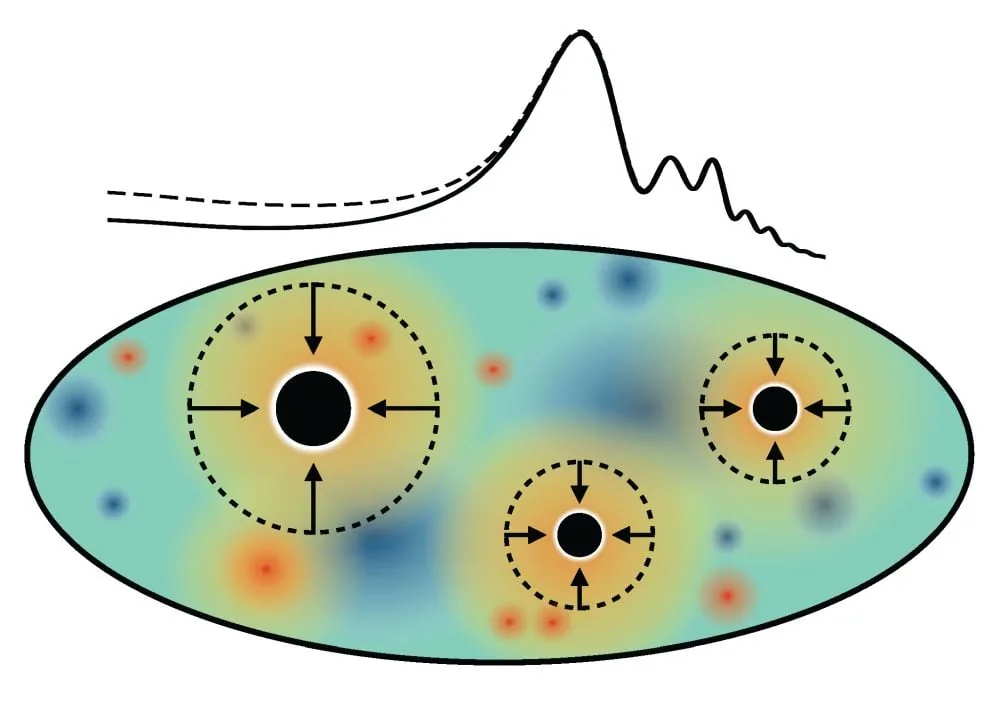
A less well-known sub-type of primordial black holes, referred to as Stupendously Large Black Holes or SLABs, was among the theoretical candidates being evaluated. However, new research demonstrates that these ultra-massive primordial structures cannot account for dark matter, removing another potential candidate from the list.
Implications for Cosmological Models
Crossing SLABs off the candidate list further narrows down the possibilities regarding the true nature of dark matter. This result obliges researchers to shift their focus back to alternative particle models or different mass scales for primordial black holes. Theoretical and observational efforts continue as astrophysicists work to unlock the fundamental secrets of the universe.
Comments
Loading comments...