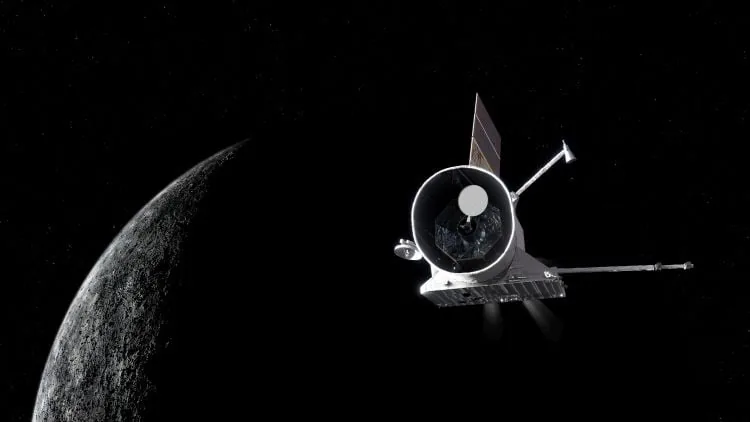
One of the Solar System's Least Explored Planets
Positioned as the innermost planet in our solar system, Mercury remains one of the least explored planetary bodies to date. Although its extreme proximity to the Sun presents significant observational challenges, it is arguably the most crucial target for scientists aiming to understand the early history of our cosmic neighborhood.
For planetary scientists and astronomers, Mercury represents a primary key to unlocking the mysteries behind how the inner solar system formed and evolved. Consequently, space agencies and research teams continue to focus on this enigmatic world through long-term space exploration missions.
The Lengthy and Complex Journey to Orbit
Dispatching a spacecraft to Mercury and successfully inserting it into orbit is a remarkably complex and time-consuming endeavor. Navigating against the intense gravitational pull of the Sun renders missions to the innermost planet among the most technically demanding in space exploration.
Achieving stable orbit around Mercury typically requires several years of journey time for any spacecraft. The complex maneuvers and precise orbital mechanics necessary for entering orbit demand years of meticulous planning and extended transit phases.
Understanding Rocky Planets and Life Beyond Earth
Mercury's unique position makes it a prime subject for investigating how rocky planets formed and evolved over cosmic time scales. Analyzing its characteristics provides vital context for understanding the general nature and developmental trajectories of terrestrial worlds, including Earth.
Furthermore, comprehending the evolution of rocky planets directly informs the broader scientific search for life beyond Earth. Data gathered from Mercury offers essential insights into planetary habitability and the fundamental conditions required for life to emerge elsewhere in the universe.


Comments
Loading comments...