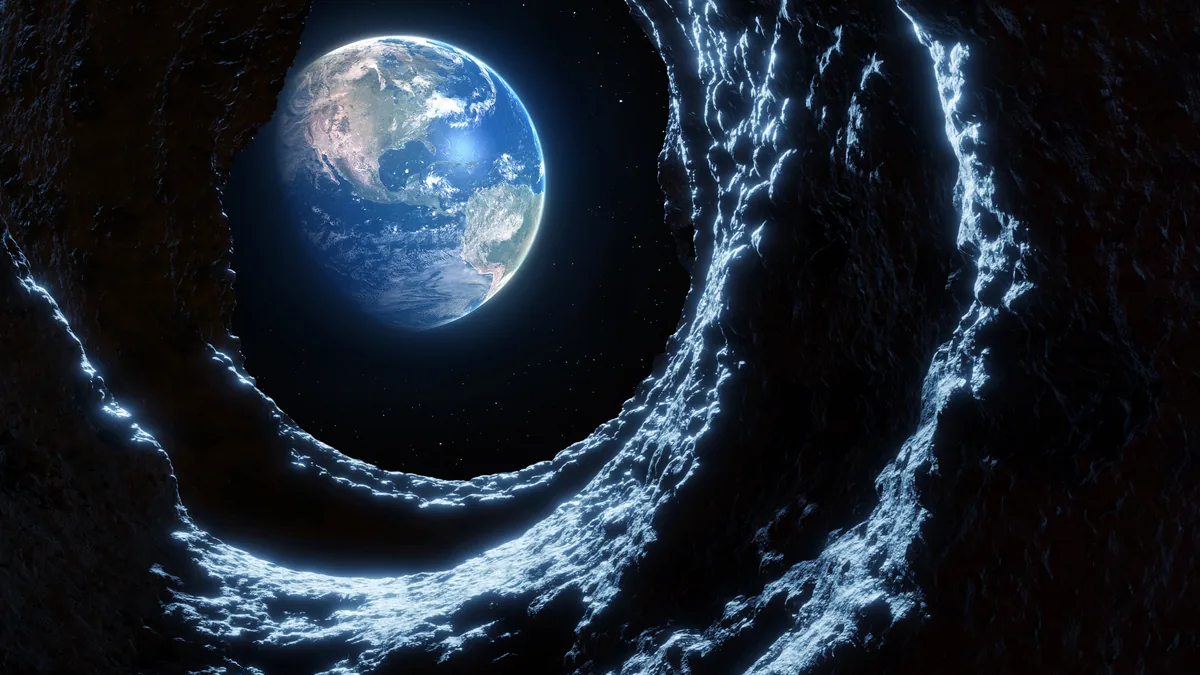
Evidence of Tunnels Beneath the Lunar Surface
Recent investigations conducted by astronomers have revealed significant evidence pointing to the presence of vast tunnels beneath the lunar surface. The detection of these subterranean passages offers vital insights into the geological history and subsurface morphology of Earth's closest celestial neighbor. Researchers emphasize that these expansive voids confirm the presence of structurally resilient subsurface cavities hidden beneath the Moon's rugged exterior.
Documented through careful analysis of surface formations, these underground channels are interpreted as prime remnants of past volcanic activity. The hollow passages beneath the regolith form shielded subterranean environments distinctly isolated from the harsh conditions dominating the Moon's exterior landscape.
Analysis and Characteristics of the Subsurface Networks
Data analyses and geological assessments suggest that these detected tunnels could encompass substantial volumes and extend over considerable distances. Detailed evaluations of surface depressions indicate that these underground structures have maintained their structural integrity over billions of years, providing viable pathways that future automated explorers could potentially navigate.
The structural characteristics of these vast tunnels mean they naturally protect against micrometeorite bombardments, hazardous cosmic radiation, and the extreme thermal swings characteristic of the lunar day and night cycles. Consequently, the interior floors of these tunnels remain insulated environments far more stable than the exposed surface.
Significance for Future Lunar Exploration
The discovery of these extensive underground cavities carries profound implications for sustaining a long-term human presence beyond Earth. Referred to as a potential future home away from home, these natural tunnel structures could host lunar habitats, sparing crews from the perilous task of assembling radiation shields directly on the hostile surface.
Furthermore, these pristine subsurface sites act as natural vaults preserving untarnished geological records from the early solar era. Future robotic and crewed exploration missions targeting the interior of these tunnels will yield critical data on lunar interior physics, volcanic history, and the evolution of rocky bodies in our solar system.
Comments
Loading comments...