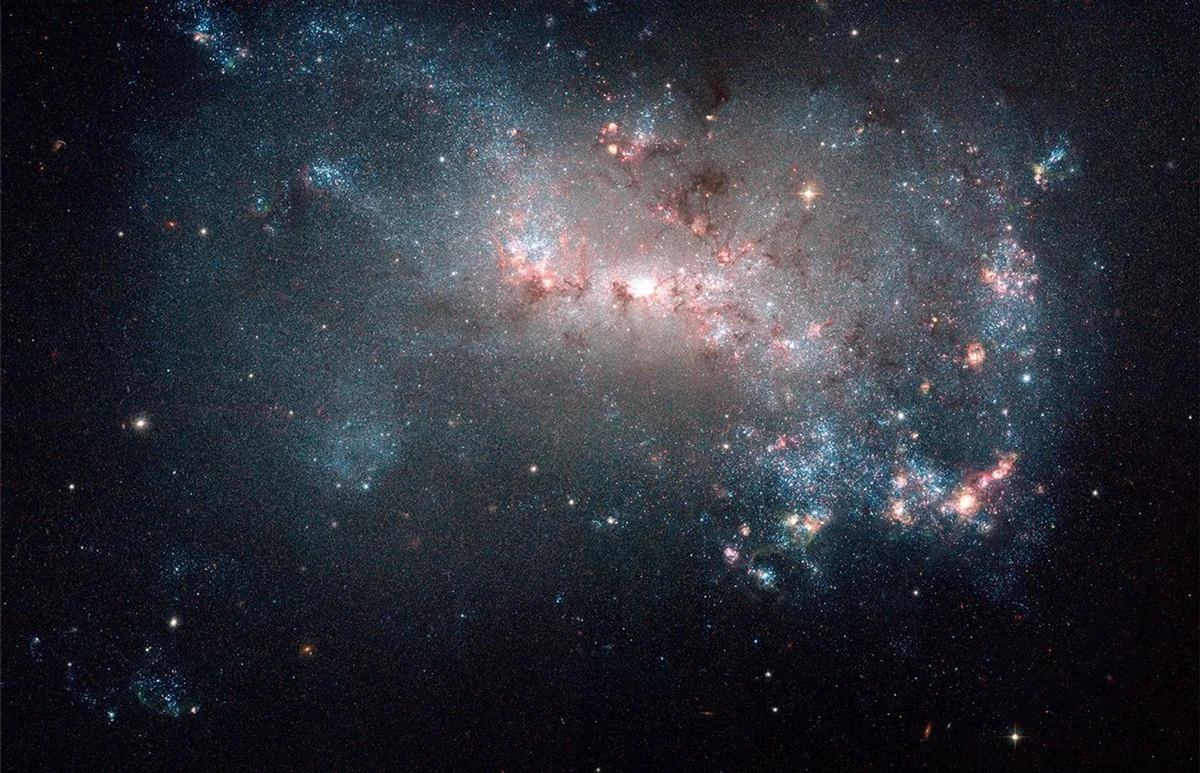
Hubble's Observations of Dwarf Galaxies
NASA's Hubble Space Telescope conducted a comprehensive survey studying dwarf galaxies in our cosmic neighborhood to better understand element distribution and galaxy evolution. Researchers targeted a total of 37 nearby dwarf galaxies as part of this observational study.
Astronomers utilized Hubble's high-precision capabilities to examine the chemical compositions and evolutionary traits of these systems. These observations provided intriguing scientific data regarding the makeup of isolated, small galactic structures in the local universe.
An Unexpected Deficit of Oxygen
Through detailed spectral and structural analysis, scientists detected a notable discrepancy in the elemental abundances that deviates from existing galactic models. The data from Hubble revealed that a significant portion of the oxygen expected to be present within these 37 dwarf galaxies is missing.
The discrepancy between the predicted oxygen levels derived from theoretical models and the actual observed values presented a baffling scenario for astronomers. The surprising scarcity of oxygen in these systems became the central focus of the study's findings.
Implications for Galactic Chemistry
This missing oxygen in nearby dwarf galaxies suggests that current models of element enrichment and galaxy evolution in smaller systems may need to be re-evaluated. These results highlight the importance of understanding cosmic gas flows and element dispersal mechanisms.
The findings captured by Hubble raise new questions about how chemical evolution proceeds in low-mass galaxies. Scientists plan to build upon these observations in future studies to trace the missing oxygen and fully decipher galactic dynamics.
Comments
Loading comments...