Ancient Cosmic Mysteries
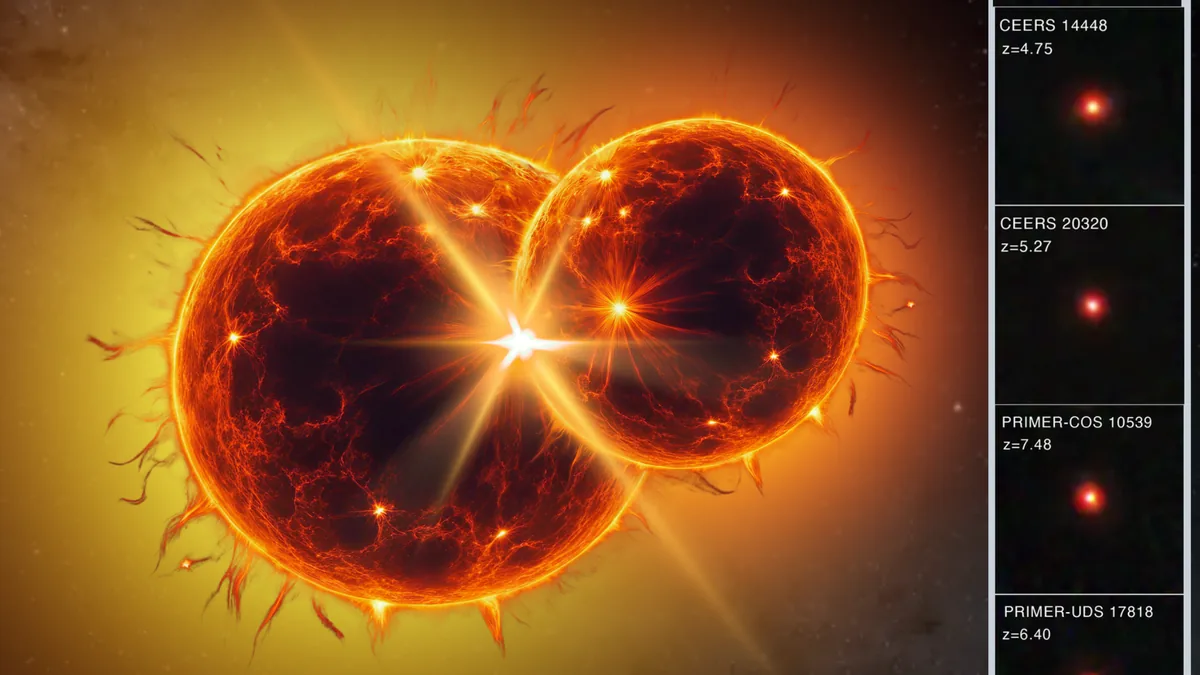
Mysterious structures dubbed 'Little Red Dots' and the unexpectedly rapid growth of supermassive black holes observed by the James Webb Space Telescope continue to puzzle astronomers. Researchers suggest that frequent stellar collisions in the early universe could hold the key to solving this cosmic enigma.
Stellar Collisions and Growth Mechanisms
In the early universe, stars were much closer together, making collisions surprisingly common. These violent interactions provided the necessary mass build-up to accelerate the formation of supermassive black holes and spawned the unusual red dots spotted by the James Webb Space Telescope.
Impact on Cosmology and Black Hole Models
These findings prompt a reevaluation of current models surrounding early galaxy formation and black hole evolution. Astronomers plan to conduct further observations with the telescope to fully decipher the nature of these Little Red Dots and confirm how the first supermassive black holes came to be.
Comments
Loading comments...