The Astrophysical Puzzle of Voracious Black Holes
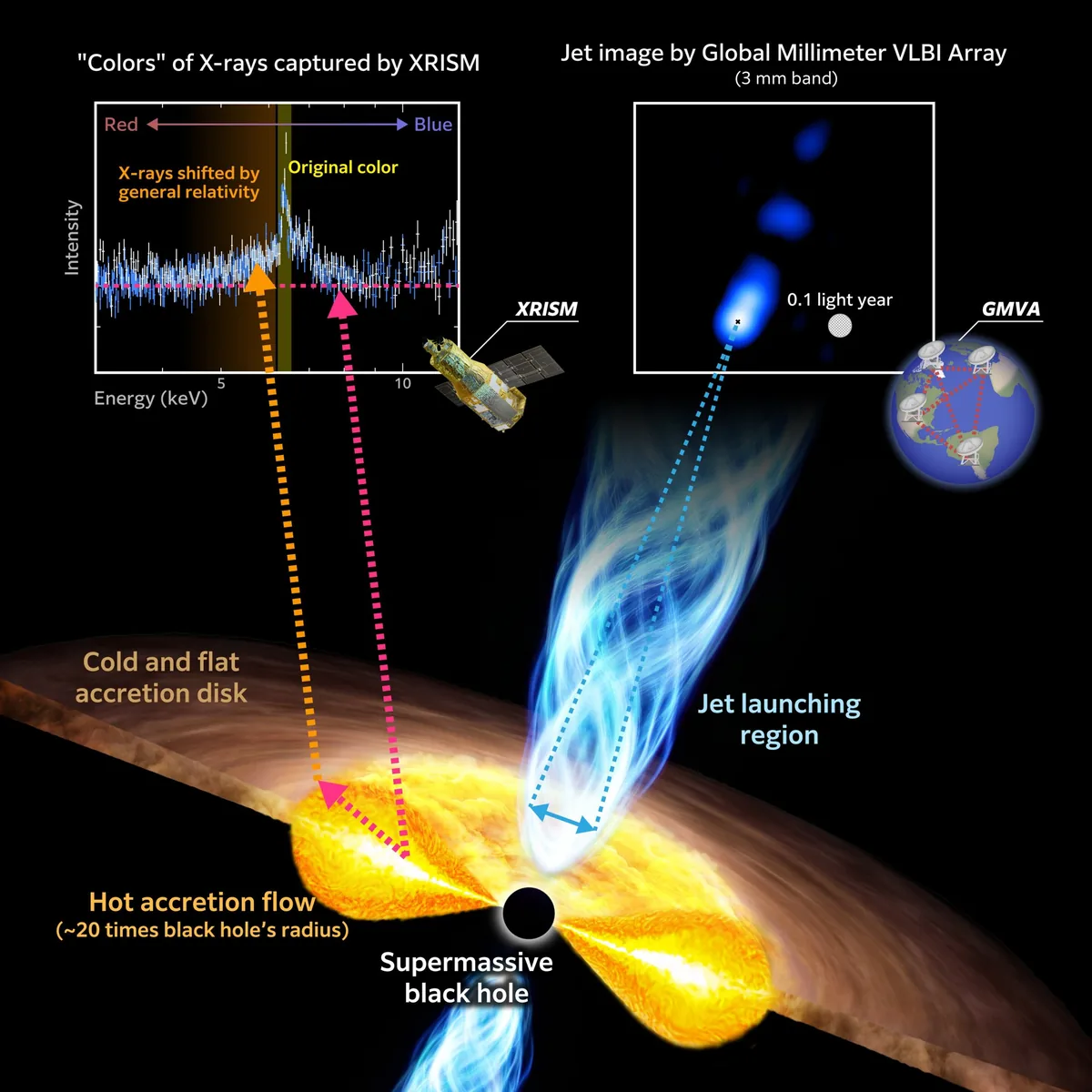
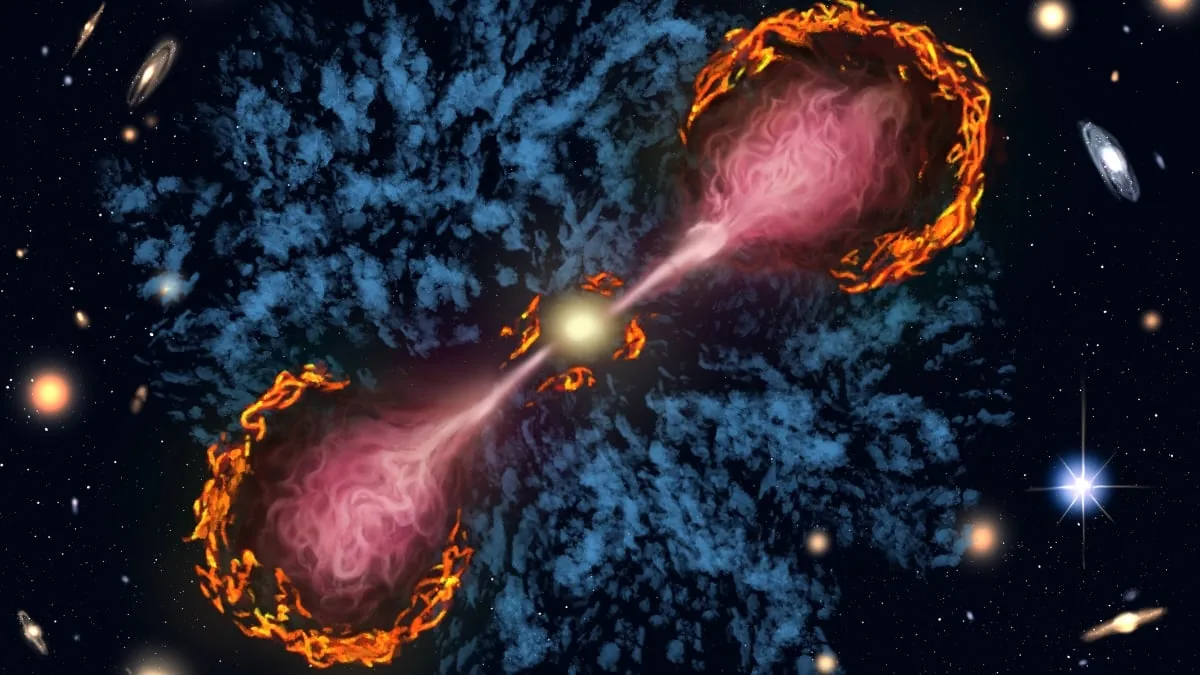
Some supermassive black holes across the universe consume surrounding matter at exceptionally high rates while simultaneously launching powerful streams of plasma into space at nearly the speed of light. However, this phenomenon presents a significant physical puzzle for astrophysicists. Conventional understanding suggests that rapid feeding should lead to the formation of a cold, geometrically flat accretion disk around the black hole.
According to standard physical models, such a cold and flattened disk environment is expected to suppress the generation of relativistic jets. Consequently, the simultaneous occurrence of rapid accretion and extreme outflows directly challenges existing theories of accretion disk dynamics.
Hot Plasma as the Driving Mechanism
To resolve this paradox, researchers point to the presence and behavior of hot plasma surrounding rapidly accreting black holes. Theoretical examinations suggest that energetic plasma structures can alter the disk environment, potentially overcoming the suppressing effects of a cold, flat accretion disk. This hot plasma medium facilitates the necessary conditions for launching particles away from the event horizon.
Through interactions with magnetic structures and extreme energy transfers, this hot plasma layer allows streams of matter to accelerate to nearly the speed of light. The mechanism provides a viable pathway for feeding energy into narrow, directed outflows despite rapid matter intake.
Significance for Accretion Models and Future Research
Uncovering how relativistic jets form in rapidly accreting systems is fundamental to comprehending how supermassive black holes interact with their host galaxies. These energetic outflows deposit momentum into surrounding cosmic environments, regulating matter distribution on large scales.
Validating the hot plasma scenario reshapes our current perspectives on black hole physics and accretion processes. Subsequent observational efforts and detailed physical modeling will be essential to verify how these extreme plasma environments operate under intense gravitational fields.
Comments
Loading comments...