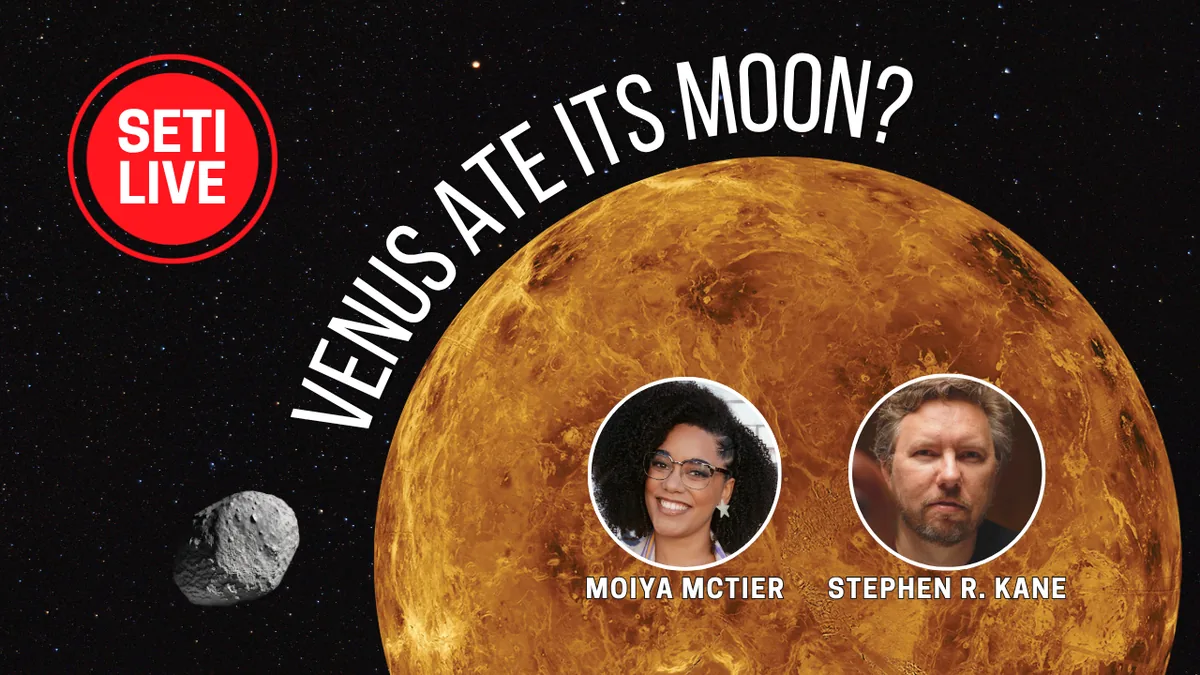
The Mystery of the Moonless Terrestrial World
While Earth is accompanied by a large natural satellite, its planetary twin Venus remarkably possesses no moons at all. Perspectives highlighted by the SETI Institute revisit the striking hypothesis that Venus once harbored a moon of its own in the past, eventually cannibalizing the object over orbital history.
Tidal Forces and Orbital Decay Dynamics
Planetary dynamic models suggest that tidal interactions and Venus's peculiar slow, retrograde rotation may have caused any ancient satellite to spiral inward rather than migrate outward. As tidal forces breached structural limits or led to a direct collision, the natural satellite would have been completely consumed by the planet.
Significance for Planetary System Evolution
This satellite-swallowing scenario offers potential clues toward explaining Venus's unusual rotation, atmospheric anomalies, and past resurfacing episodes. Investigating how ancient orbital mergers played out helps refine models of chaotic planetary evolution throughout the early inner Solar System.
Comments
Loading comments...