A Decade of Monitoring Blazar OJ 287
Astronomers conducted an extensive decade-long photometric monitoring campaign targeting the blazar OJ 287 between 2015 and 2025. Reported by AAS Nova, this research focused on analyzing the long-term optical variability of this active galactic nucleus. The research team utilized multi-band optical observations to continuously track brightness fluctuations and the dynamic behavior of this distant cosmic powerhouse over a ten-year period.
Photometric Measurements and Spectral Trends
Analysis of the photometric data revealed that OJ 287 consistently exhibits a bluer-when-brighter trend during both short-term and long-term variability phase transitions. Alongside photometric tracking, spectroscopic monitoring provided crucial quantitative data regarding the system's central engine. Spectral measurements indicate that the central supermassive black hole possesses a mass of at least 3.89 billion solar masses, offering a robust lower limit for theoretical models.
Scientific Implications for Black Hole Physics
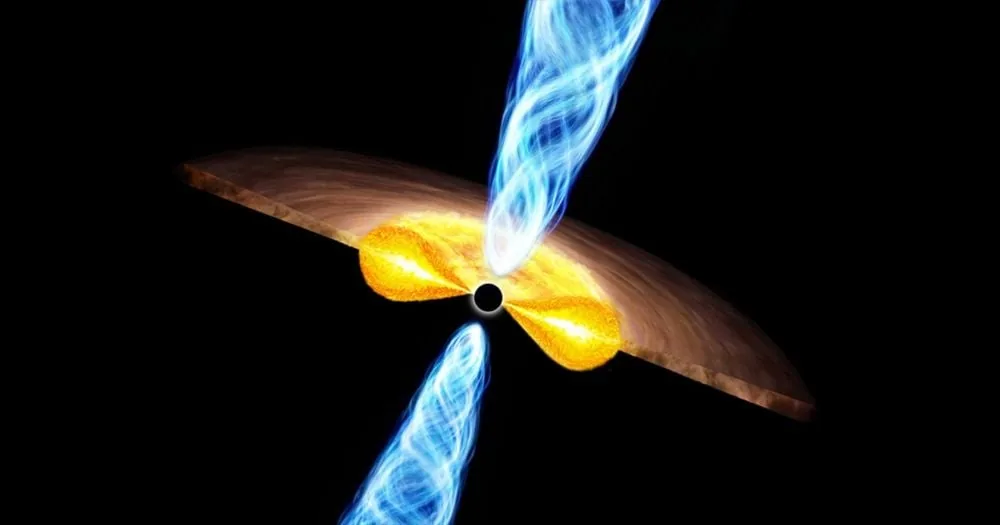
The extensive dataset accumulated over ten years provides vital constraints for physical models describing blazar jet physics and accretion dynamics around supermassive black holes. Understanding the precise relationship between color changes and luminosity variations helps refine theories on energy extraction mechanisms in active galaxies. Future observational campaigns are planned to build upon these results and probe the inner details of OJ 287 further.

Comments
Loading comments...