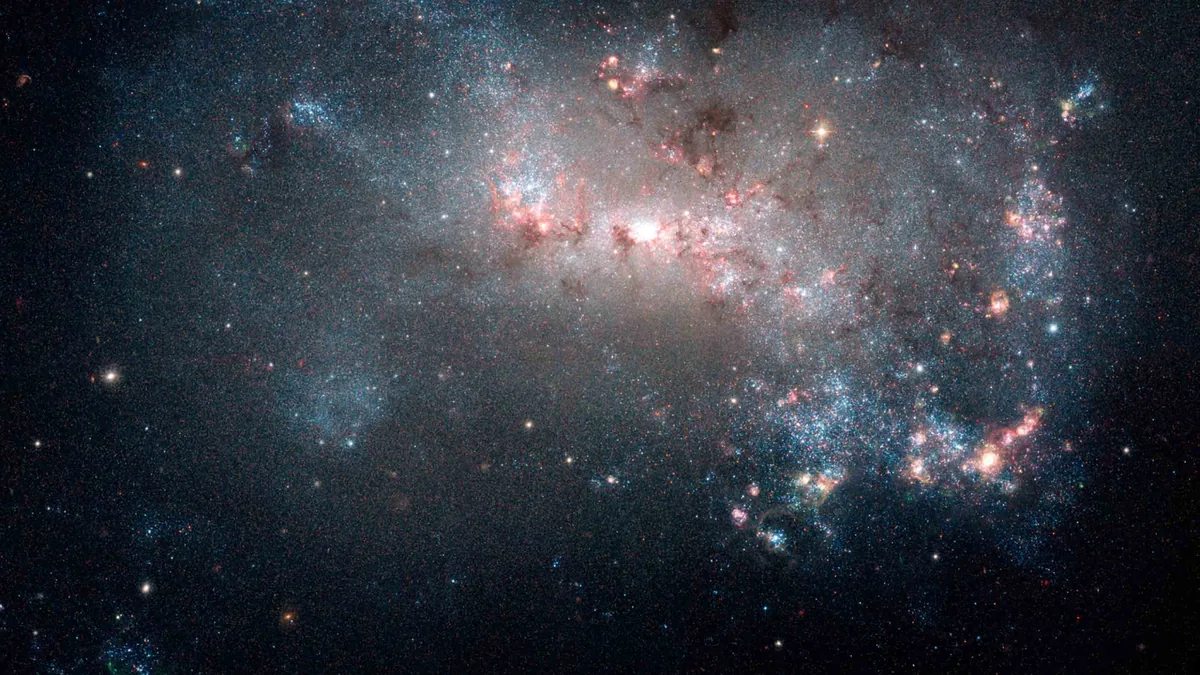
Extensive Dwarf Galaxy Survey Using the Hubble Space Telescope
Astrophysicists analyzing observational data collected by NASA's Hubble Space Telescope have uncovered a major discrepancy regarding small-scale cosmic structures. The research team, which includes an astrophysicist from Rutgers University, focused on dwarf galaxies that are significantly smaller than our Milky Way. Published in The Astrophysical Journal, the new findings provide crucial insight into the chemical evolution and metal retention mechanisms of low-mass galactic systems in the local Universe.
Oxygen Deficit Measured Across 37 Nearby Galaxies
The scientists conducted a detailed examination of 37 dwarf galaxies situated within 22 million light-years of Earth, placing them firmly in our cosmic neighborhood. By evaluating the stellar populations inside these systems, the researchers estimated the total volume of oxygen that should have been synthesized over time. Comparing these evolutionary models with observational measurements revealed that dozens of these dwarf galaxies contain far less oxygen than their stars actually generated.
Implications for Galactic Winds and Chemical Evolution Models
The substantial absence of synthesized heavy elements indicates that powerful energetic mechanisms are driving enriched gas out of these shallow gravitational wells. Energetic stellar winds and supernova explosions likely expel the newly formed oxygen directly into intergalactic space. These results compel astrophysicists to update current models of chemical enrichment, offering a clearer perspective on how small galaxies shape the distribution of vital elements across cosmic history.

Comments
Loading comments...