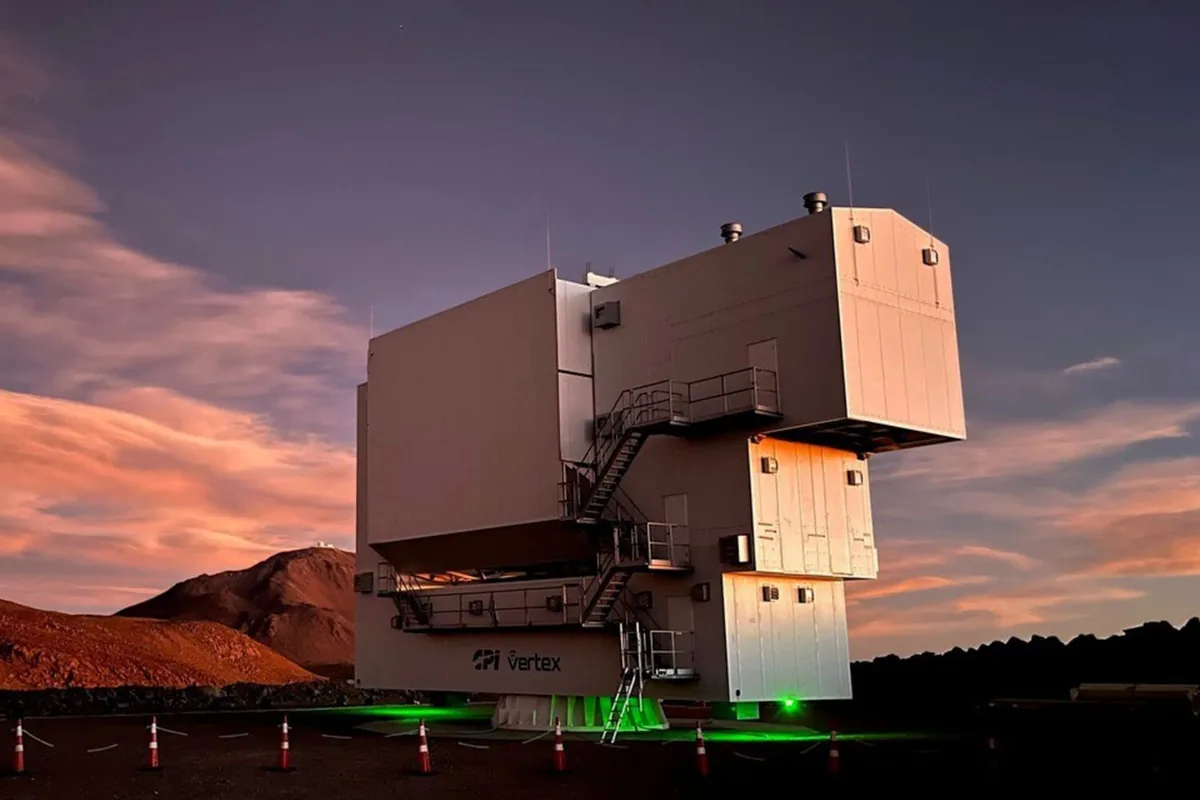
A New Era for Cosmological Research in the Atacama Desert
The Simons Observatory (SO), located in Chile's Atacama Desert, is now fully online and actively conducting science operations. Following two years of precise calibration work, the addition of new telescopes, and the installation of a new solar array to guarantee energy security, the observatory is now performing comprehensive sky surveys. Researchers from the Kavli Institute for Particle Astrophysics and Cosmology (KIPAC) at Stanford and SLAC National Accelerator Laboratory played a vital role in virtually every component of this project.
Technical Infrastructure and Advanced Measurement Capabilities
The high-altitude, dry atmosphere of the Atacama Desert provides one of the best environments on Earth for delicate astrophysical measurements. During the two-year calibration phase, the observatory's instruments and telescope systems were tuned to high precision. The addition of a dedicated solar array provides energy security, allowing continuous operation. These technical systems enable the recording of faint cosmic signals with minimal noise contamination.
Mapping Cosmic Scale Structures and Galactic Dust
The Simons Observatory survey spans a broad scientific range, from the largest structures in the observable cosmos to the dust particles and magnetic fields inside our own Milky Way galaxy. The data gathered during these science operations will offer researchers insights into cosmic evolution and structural development. Scientists plan to utilize these measurements to evaluate fundamental physics models and refine our understanding of the universe.

Comments
Loading comments...