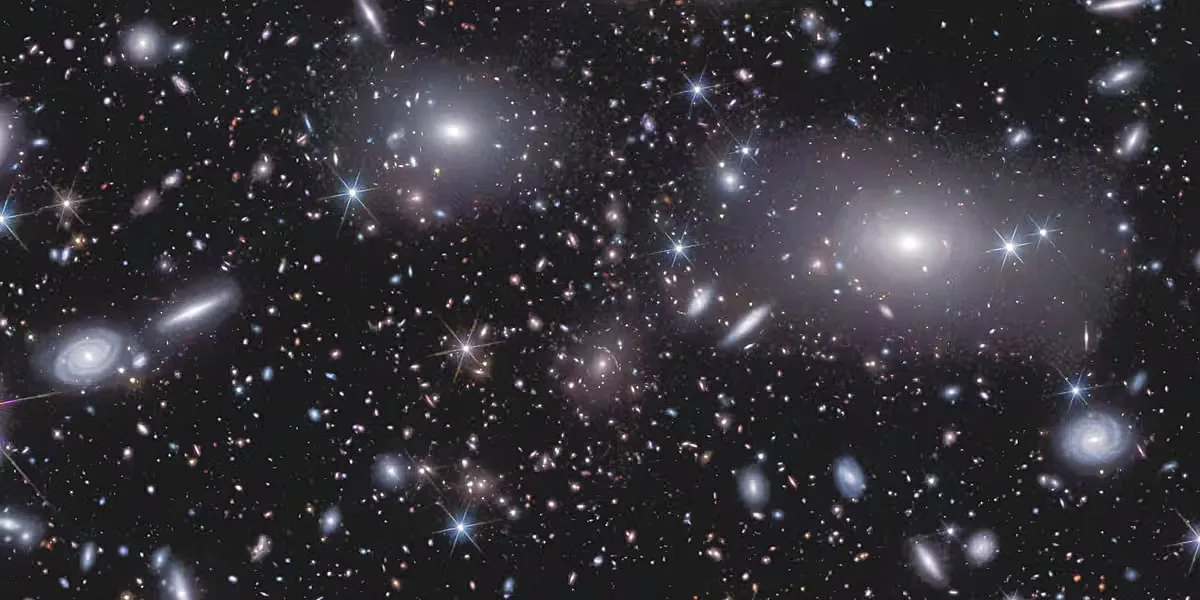
First Major Data Release in Pursuit of the Dark Universe
Launched into space in July 2023, the Euclid space telescope continues its mission to explore two of astronomy's biggest mysteries: dark matter and dark energy. The space telescope's first major data release has been presented to the scientific community, covering approximately 1,900 square degrees of the sky. This vast observational area represents around 14% of the area planned for its six-year mission and roughly 5% of the total sky.
H-Alpha and Near-Infrared Observation Details
This unprecedented collection of observations provided by Euclid consists of visible and near-infrared data. The telescope's H-alpha observations allow scientists to map precisely where stars are forming within distant galaxies. The combination of visible and near-infrared light measurements provides a detailed foundation for analyzing galactic structures.
Understanding Galaxy Evolution and Future Mission Stages
This initial comprehensive mapping marks a significant milestone in understanding star formation processes and galactic structures in distant galaxies. Covering about 5% of the total sky early in its six-year mission, these data offer scientists critical insights into the full cosmic survey to come and the broader mystery of dark energy and dark matter.
Comments
Loading comments...