Challenging the Merger Paradigm: Can Black Holes Divide?
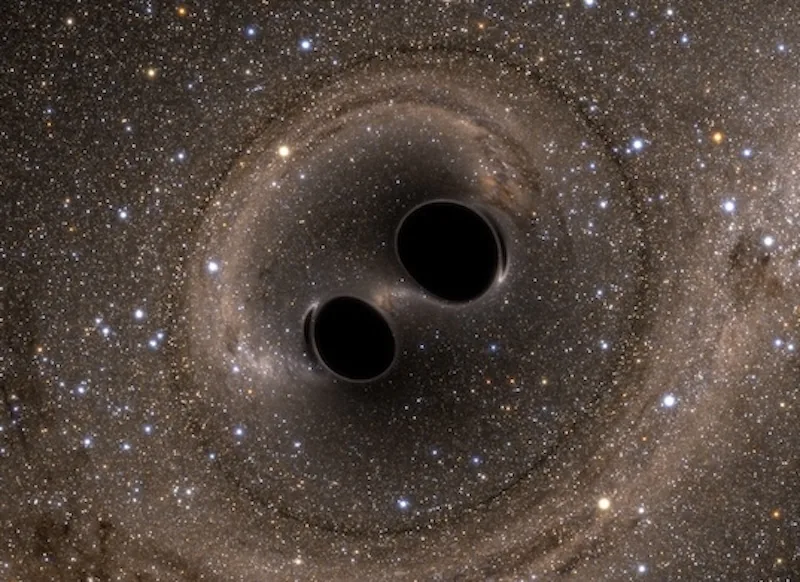
In observational astrophysics, black holes are widely understood to grow larger through dramatic coalescences, a process repeatedly verified by gravitational-wave observations. However, a provocative new study turns this paradigm on its head by exploring whether a single black hole could ever divide into two or more independent remnants. The theoretical investigation evaluates the boundary conditions of general relativity that might permit such an unprecedented phenomenon.
The research team utilized sophisticated theoretical models to investigate whether scenarios historically regarded as dynamically impossible could emerge under specialized and ultra-extreme astrophysical conditions.
Rapid Rotation and the Mechanics of Horizon Instability
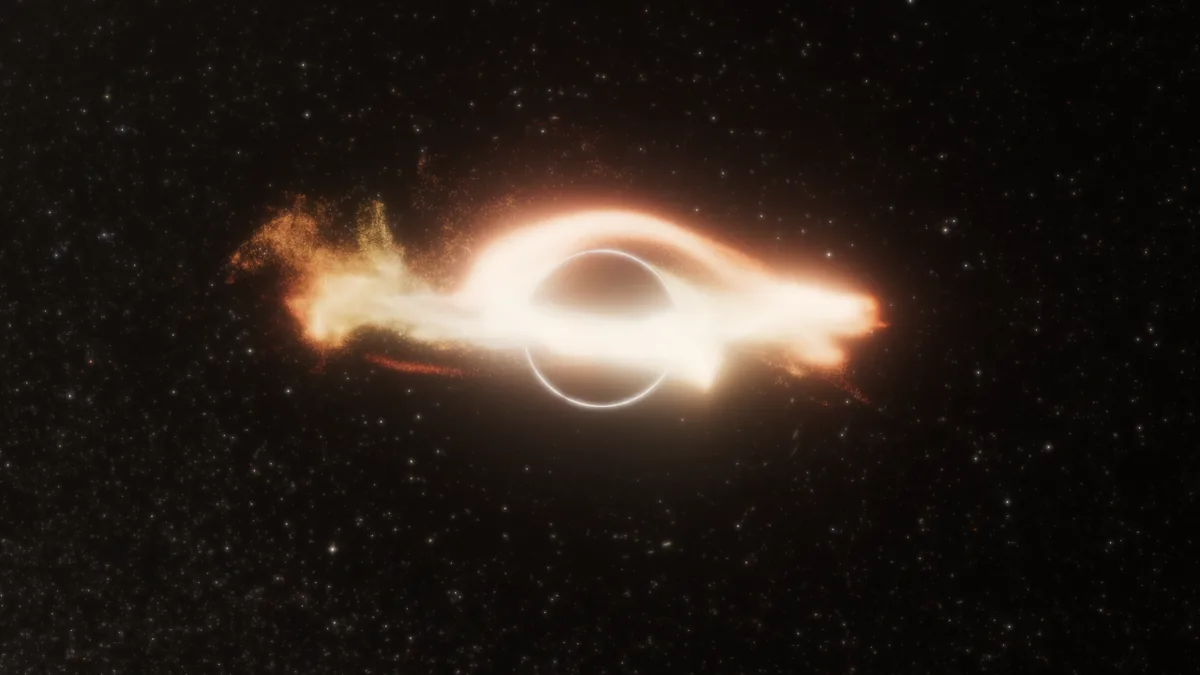
The core mechanism examined in the study centers on extreme rotational velocities. According to the research, a black hole splitting event would necessitate near-extremal spin rates, where rotational energy severely distorts the local spacetime geometry. In these regimes of ultra-rapid spin, centrifugal-like relativistic phenomena begin to challenge standard assumptions regarding event horizon cohesion.
The investigation assesses how such rapid rotation alters the geometry of the horizon, testing whether gravitational perturbations could trigger a physical fission. By contrasting these dynamics with classical area theorems, the researchers map out the precise physical parameters under which mathematical instabilities could conceivably split the horizon into distinct topological entities.
Theoretical Horizons and Gravitational-Wave Implications
The concept of black hole fission presents fascinating implications for general relativity and quantum gravity theories. Because classical black hole thermodynamics typically dictates that the total horizon area must not decrease, validating a division scenario requires careful theoretical reconciliations, potentially highlighting the presence of novel physics beyond standard relativistic frameworks.
Moving forward, next-generation gravitational-wave detectors and high-precision cosmic observatories may offer empirical means to search for signatures of rapidly rotating black hole systems approaching these theoretical thresholds. The study underscores that our theoretical journey into the nature of spacetime continues to reveal startling possibilities.

Comments
Loading comments...