Unveiling the Final Breath of a Dying Star
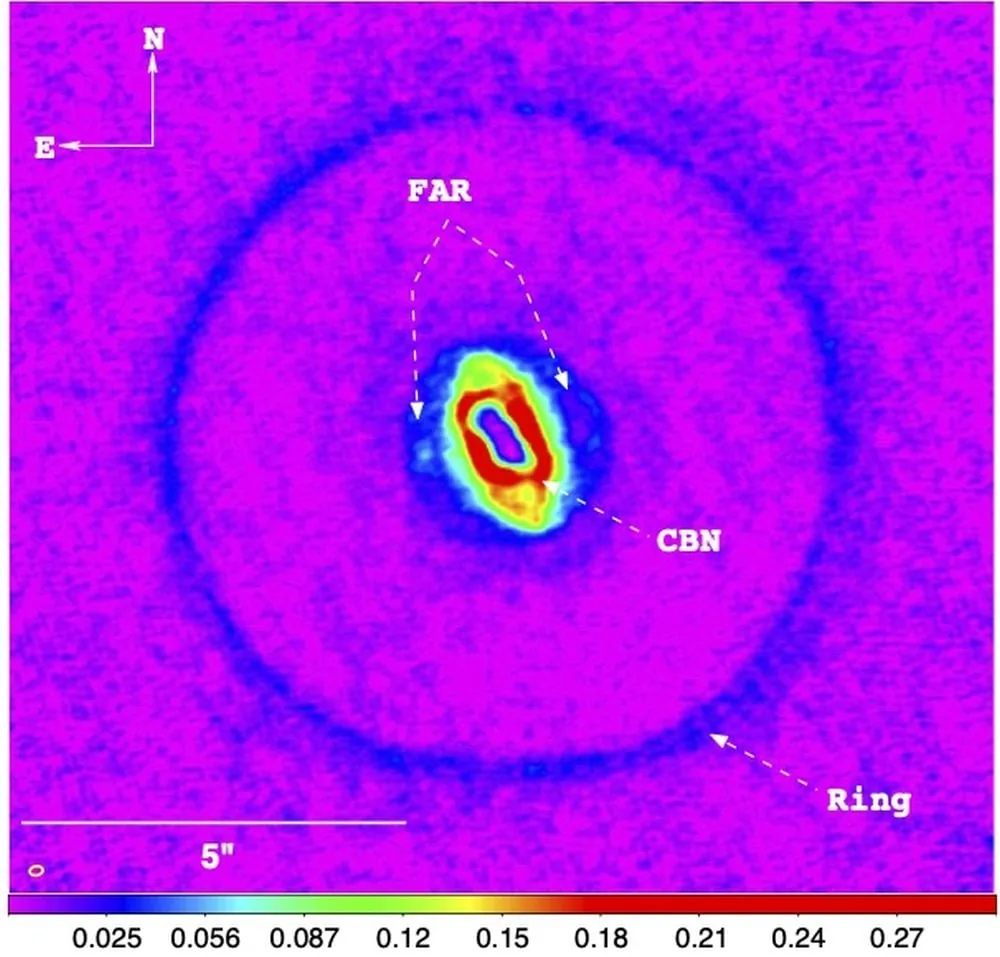
The ALMA (Atacama Large Millimeter/submillimeter Array) observatory has captured a groundbreaking glimpse into the final stages of a dying star. Roughly 6,500 years ago, the star emitted its final thermal pulse, expelling a massive ring of gas into surrounding space during its dying moments.
Observations of the Giant Gas Ring and Hourglass Nebula
ALMA's high-sensitivity radio observations clearly mapped the expansive gas ring created by the ancient thermal pulse. Following that event, just 700 years ago, the star gave rise to a distinct hourglass-shaped nebula. The structural timeline captured by ALMA chronicles the star's episodic mass ejection history.
Direct Evidence Supporting Stellar Evolution Theory
Theoretical models had long predicted that final thermal pulses in dying stars lead to the formation of hourglass nebulae, but direct evidence had remained elusive. ALMA's discovery provides the very first direct observation supporting this astrophysical theory, enriching our understanding of stellar death cycles.
Comments
Loading comments...