A Rare One-in-Ten-Billion Decay Process
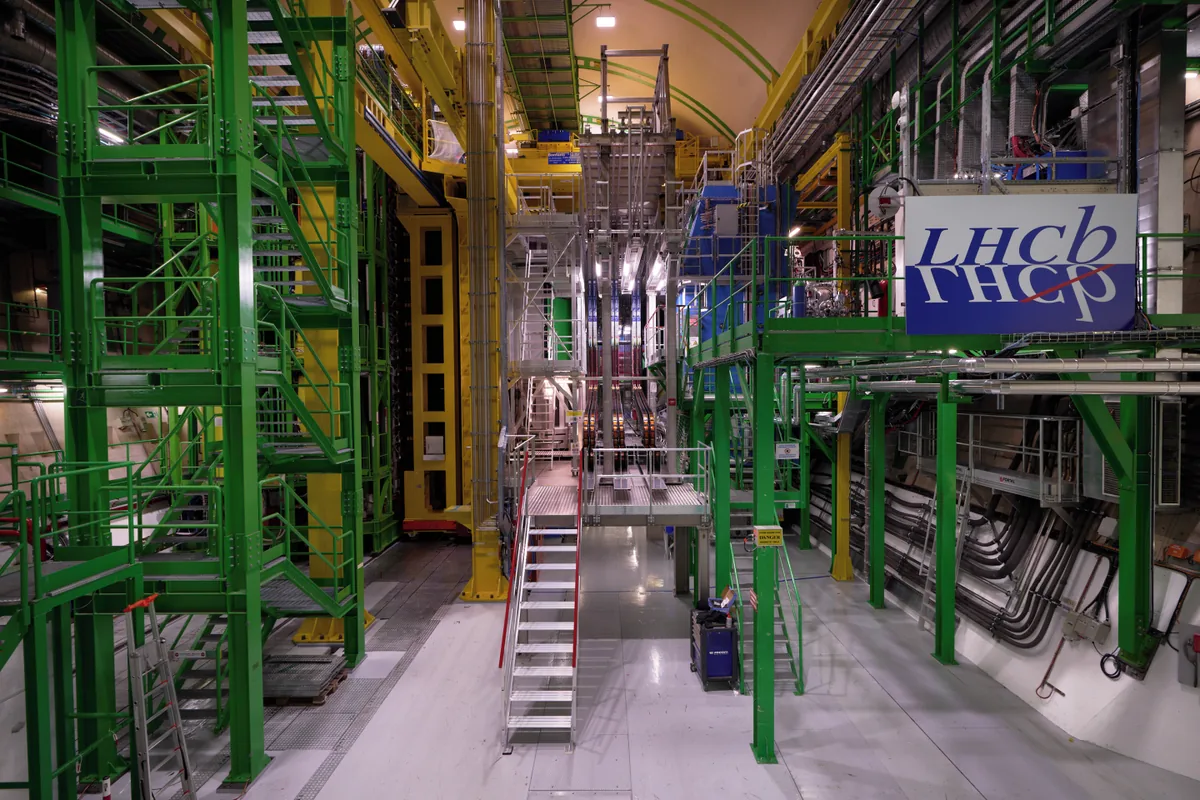
Recent research conducted by the LHCb Collaboration at CERN marks a major milestone in a decades-long pursuit in particle physics. Scientists have uncovered evidence for the decay of a beauty particle, known as B d — composed of a beauty quark and a down antiquark — into a pair of muons (μ+ μ–). Announced during a seminar at CERN, this achievement represents the first time evidence for this particular decay process has been obtained using data from a single experiment.
Observational Details and Precise Measurements
The transformation of a B d particle into a muon pair is an exceptionally rare event according to the principles of quantum physics. Occurring statistically in roughly one out of every ten billion instances, this elusive decay process was detected thanks to the high-precision datasets gathered by the LHCb detector. Because particle decays are sensitive to the quantum influences of other particles, accurate measurements of such low-probability events are essential for modern physics.
Impact on the Standard Model and Beyond
The newly obtained results align closely with the theoretical predictions outlined by the Standard Model of particle physics. By confirming the decay rate with high confidence, the findings place strong constraints on possible new particles and hypothetical forces beyond the Standard Model. This milestone provides a firmer foundation for future physics searches exploring the fundamental building blocks of the universe.


Comments
Loading comments...