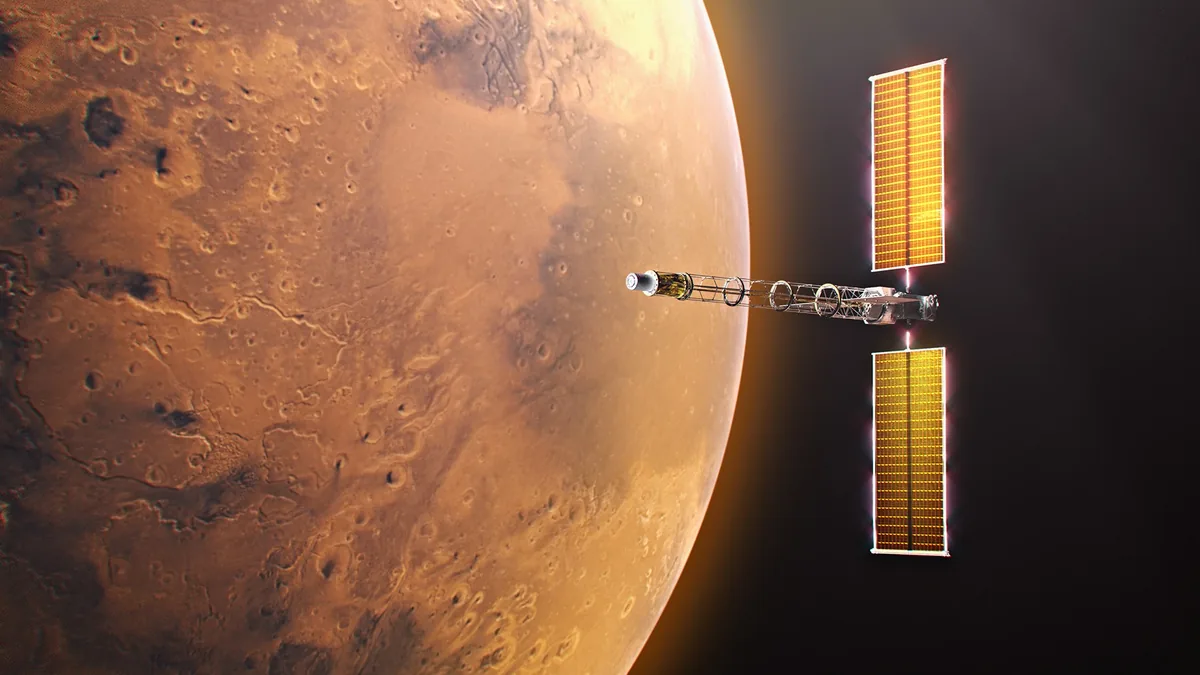
SR-1 Freedom and the Nuclear Deep Space Ambition
NASA has reported steady progress on Space Reactor-1 (SR-1) Freedom, an ambitious initiative aimed at opening a new chapter in deep-space exploration. Originally announced during NASA's 'Ignition' event, SR-1 Freedom is designed to become humanity's first fission-powered spacecraft to journey beyond low Earth orbit, serving as a pathfinder for nuclear propulsion systems capable of reaching Mars and distant outer solar system targets.
Nuclear Electric Propulsion Module Progress
The centerpiece of the SR-1 Freedom architecture is its integrated nuclear power module. The spacecraft aims to validate nuclear electric propulsion (NEP) in the deep-space environment, delivering far greater fuel efficiency and continuous thrust compared to conventional chemical rockets. NASA teams are currently accelerating development workflows on key reactor and conversion subsystems to bring the flight-ready hardware toward operational readiness.
Significance for Mars Exploration and Beyond
Unlike solar arrays, whose power generation drops drastically as distance from the Sun increases, onboard fission reactors provide constant and scalable power in deep space. Proving nuclear electric propulsion with SR-1 Freedom could drastically reduce transit times for future crewed Mars missions while enabling advanced robotic probes to operate high-energy scientific instruments anywhere across the solar system.

Comments
Loading comments...