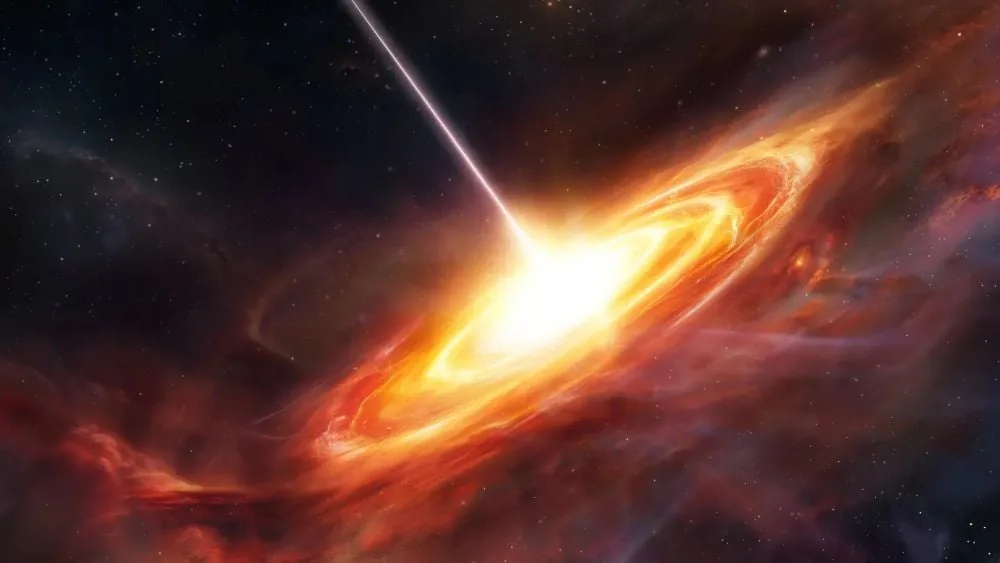
Groundbreaking Observation by the Euclid Mission
The European Space Agency's Euclid Space Telescope, designed to probe the dark universe, has identified an extraordinary record-setting quasar. Captured during Euclid's deep and wide surveys, this luminous active galactic nucleus represents one of the most distant cosmic entities ever spotted.
Redshift Measurements and Cosmic Timeline
Astronomical analysis confirms that this newly discovered quasar sits at an astonishing redshift of z=8.13. This corresponds to approximately 630 million years after the Big Bang, successfully beating the previous cosmic record by about 40 million years.
Implications for Early Black Hole Evolution
The existence of such massive and energetic engines so early in cosmic history remains an enduring puzzle for cosmologists. Each new detection at these extreme frontiers provides vital incremental evidence, refining astrophysics models that describe how supermassive black holes formed and grew rapidly from primordial seeds.
Comments
Loading comments...