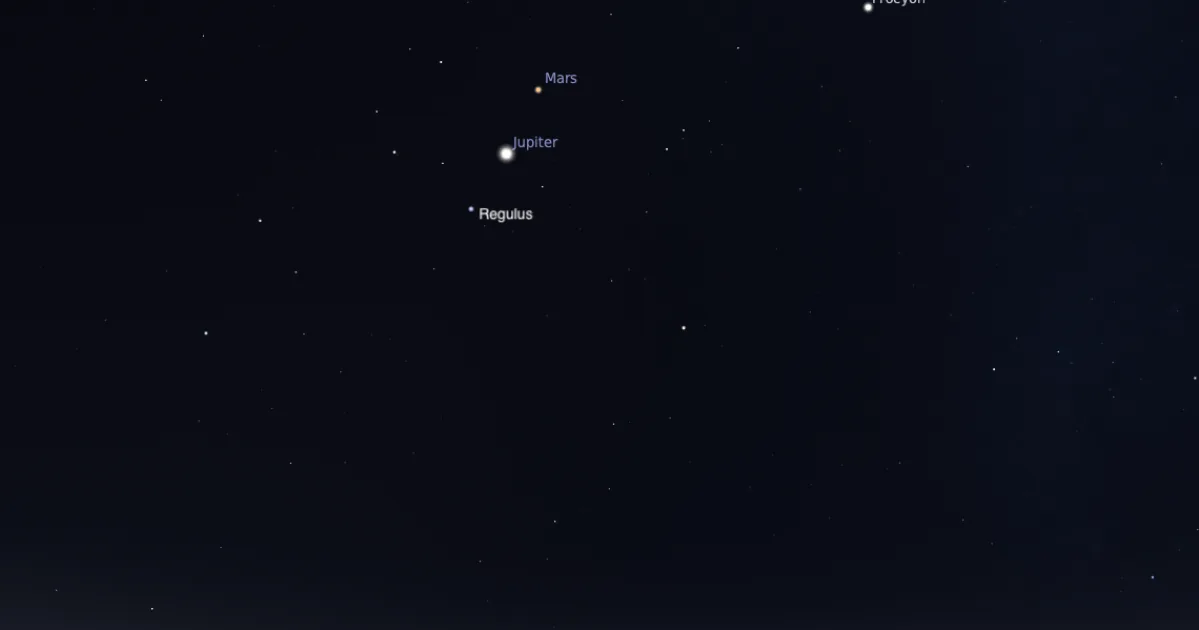
The Red Planet's Journey Across the Constellations
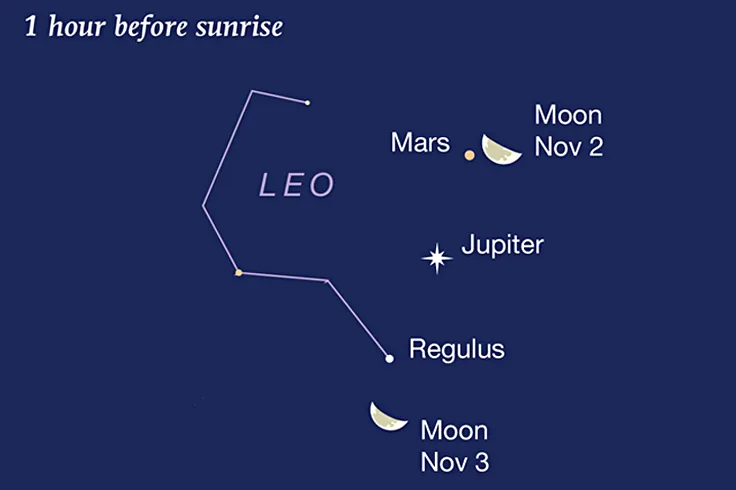
Continuing its orbital journey across the backdrop of the night sky, Mars is making a steady eastward progression through the zodiacal constellations. According to astronomical observations, the Red Planet has reached the celestial border region separating Cancer the Crab from Leo the Lion. Still lingering within the boundaries of Cancer during morning hours, Mars provides a compelling tracking target for observational astronomers.
Positioned 60 Degrees High in the Southeast
Mars now stands approximately 60 degrees high above the southeastern horizon during early morning observations. This considerable altitude lifts the planet well clear of atmospheric turbulence and haze close to the horizon, granting telescope users stable viewing conditions. Shining at an apparent magnitude of 0.8, its distinct reddish-orange glow makes it an unmistakable beacon in the morning sky before dawn breaks.
Observing Context and Deep-Sky Companions
Alongside planetary tracking, the autumn observing calendar features deep-sky targets such as the open cluster Collinder 463. Mars's journey between Cancer and Leo illustrates the dynamic nature of planetary orbital mechanics relative to background stars, offering both casual observers and serious astrophotographers an excellent benchmark for recording planetary motion in the coming weeks.

Comments
Loading comments...