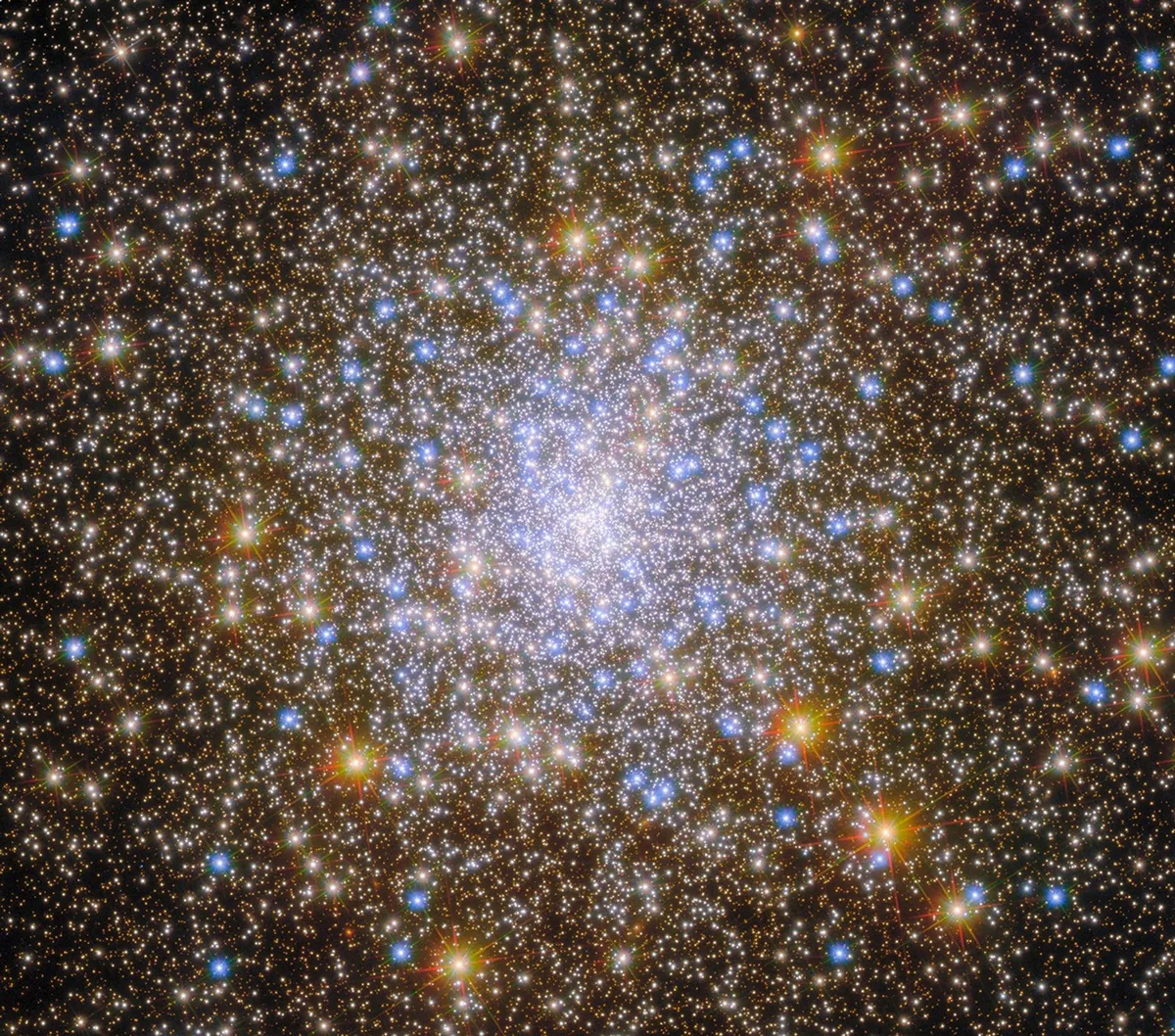
Sparkling Stellar Collection Captured by Hubble
The Hubble Space Telescope has released a breathtaking image featuring the dense collection of stars known as Messier 30 (M30). Also designated as NGC 7099 in astronomical catalogs, this object is a classic example of a globular cluster packed with thousands of ancient, glittering stars. The newly processed image reveals the intricate details of stars tightly bound by gravity near the cluster's core.
Observing objects like Messier 30 allows astronomers to investigate the early conditions of our galaxy. Hubble's powerful optics enable scientists to resolve individual stars within the densely populated central region, providing a clearer look at stellar structure.
Observational Data and Stellar Population Analysis
Utilizing Hubble's advanced imaging sensors, the observation captured subtle variations in brightness and color among the stars in Messier 30 (NGC 7099). The extreme density of stars near the center of M30 makes it a key target for studying stellar interactions and orbital dynamics within globular clusters.
Photometric measurements obtained from the image help astronomers classify the stars based on their evolutionary stages. By mapping the positions and light profiles of these celestial bodies, researchers can trace how mass is distributed across the cluster.
Scientific Significance for Galactic History
Globular clusters like Messier 30 serve as living fossils of galactic history. Formed during the early stages of galaxy assembly, their ancient stellar populations hold clues about the chemical composition and physical environment of the universe billions of years ago.
Hubble's ongoing study of NGC 7099 contributes directly to refining models of galactic evolution and star formation. These detailed observations will continue to serve as reference points for future space telescope investigations.
Comments
Loading comments...