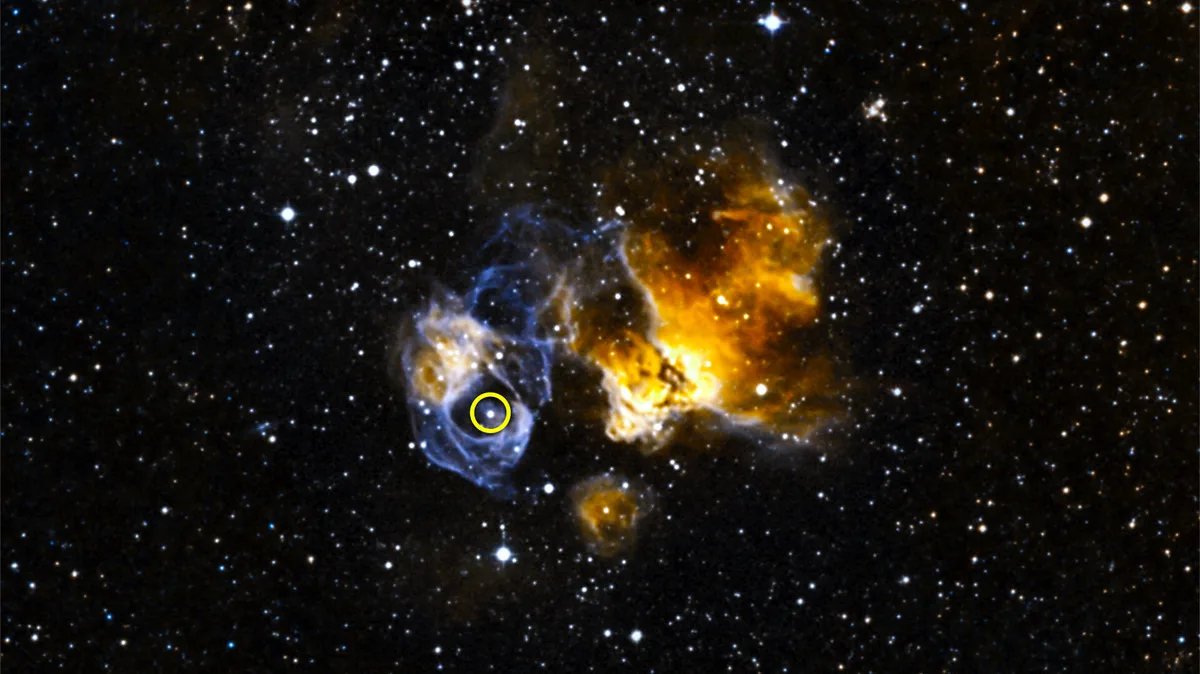
Gamma-Ray Powerhouse in Our Galactic Neighborhood
In 2016, astronomers discovered an unusual binary star system in our galactic neighborhood emitting extraordinarily strong gamma rays. For years, the precise physical mechanism behind this intense high-energy radiation remained a subject of ongoing study. Recent observational work has finally provided decisive insight into the origin of this energetic system.
The research team identified compelling evidence explaining the binary system's extreme energy output. The observations confirm that the powerful gamma-ray emissions are linked to a microquasar, a rare phenomenon when observed outside the Milky Way galaxy.
Cool Molecular Gas Trail Confirms Jet Activity
Astronomers detected a striking trail of cool molecular gas carved out in the vicinity of the binary system. This gaseous trail serves as a clear smoking gun, demonstrating that powerful relativistic jets emanating from the microquasar are interacting directly with the surrounding medium.
Detailed measurements reveal that the alignment of the cool molecular gas matches the trajectory of the outflowing jets. As these jets plow through interstellar space, they compress and sweep up cool gas, producing the high-energy gamma-ray signature observed by researchers.
Scientific Significance for Extragalactic Astrophysics
Microquasars serve as natural laboratories for studying extreme physical processes, including mass accretion and jet formation around compact objects. Because extragalactic microquasars are exceptionally difficult to detect, this finding gives astrophysicists a unique opportunity to test models beyond our own galaxy.
The discovery enhances our understanding of how cosmic particle acceleration and jet activity shape surrounding environments. Future observations will focus on mapping the gas structure in greater detail to further refine theories of extragalactic high-energy phenomena.


Comments
Loading comments...